Friday, 6 July 2018

10 Refreshing Infused Water Recipes (With Fruit & Herbs!)

Fruit infused water recipe

Fruit-infused waters are a wonderful and refreshing drink option for summer when the sun is out, the kids are bored, and the bugs are biting. TV commercials will try to convince you that only soda and processed drinks are thirst-quenching enough for summer. Of course, you probably already know better, but sometimes it is nice...

Continue reading 10 Refreshing Infused Water Recipes (With Fruit & Herbs!)...


from Wellness Mama® https://wellnessmama.com/3607/herb-fruit-infused-water/
via SEO Derby

Thursday, 5 July 2018

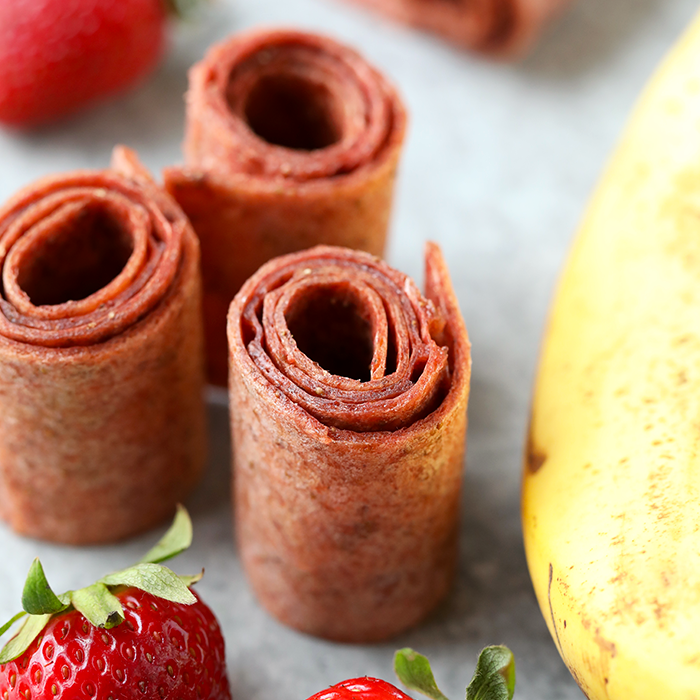
Strawberry Banana Fruit Leather Recipe

With just four simple ingredients you can make your own HEALTHY Strawberry Banana Fruit Leather recipe at home without the use of a dehydrator! Bonus, this homemade fruit leather only requires a few ingredients and contains no refined sugar or flavors. Please tell me you are a woman (or man!) child who still eats fruit...

Read More »

The post Strawberry Banana Fruit Leather Recipe appeared first on Fit Foodie Finds.


from Fit Foodie Finds https://fitfoodiefinds.com/video-homemade-strawberry-banana-fruit-leather/
via Holistic Clients

What to do in Maui

If you’re wondering what to do in Maui don’t you worry because after a week exploring the beautiful Hawaiian island, we still didn’t get to everything there is to do. From hiking to beaches, the Road to Hana and waterfalls, if you love outdoor adventure then Maui is just the place for you. I’ll be sharing... Read More The post What to do in Maui appeared first on Running on Real Food.

[[ This is a content summary only. Visit my website for full links, other content, and more! ]]


from Running on Real Food https://runningonrealfood.com/what-to-do-in-maui/
via Enlightened Marketing

How to Whiten Teeth With Activated Charcoal

How to whiten teeth with activated charcoal

Years ago, a reader from India told me about a natural way to whiten teeth and it is the only method I’ve used since that time. Her suggestion? Whiten teeth with charcoal! Whiten Teeth With Charcoal? I was very skeptical that charcoal could actually help whiten teeth. I already kept activated charcoal around the house since we...

Continue reading How to Whiten Teeth With Activated Charcoal...


from Wellness Mama® https://wellnessmama.com/3662/whiten-teeth-naturally/
via SEO Derby

Wednesday, 4 July 2018

Fudgy Paleo Avocado Brownies

Paleo Avocado Brownie Recipe

There’s nothing like a rich and delicious dessert that you also know is good for you! Since avocado is filled with healthy fats, it’s the perfect sneaky substitute for butter in these fudgy brownies. If you are skeptical about making brownies with avocado, don’t be. I promise, you won’t even be able to tell it’s in there!...

Continue reading Fudgy Paleo Avocado Brownies...


from Wellness Mama® https://wellnessmama.com/369347/avocado-brownie/
via SEO Derby

Tuesday, 3 July 2018

Methylation and Autism

Demystifying methylation

The topic of methylation has exploded in popularity in recent years. An increasing number of healthcare practitioners are incorporating methylation assessment into their clinical practice, and the market for direct-to-consumer genetic testing, which allows people to identify genetic variants that may impact methylation, is booming.

Methylation is the process of transferring a single carbon atom and three hydrogen atoms, collectively referred to as a methyl group, from one substance to another in the body. The transfer of methyl groups regulates countless biochemical processes, including cell division, gene expression, DNA and RNA synthesis, development of the nervous system, immune cell differentiation, neurotransmitter synthesis, histamine clearance, and detoxification. To learn more about the ins and outs of methylation, listen to my podcasts Methylation 101, Methylation—What Is It and Why Should You Care? and What Influences Methylation? An Interview with Dr. Ben Lynch.

 In autism, genetic variants such as MTHFR may load the gun, but the exposome pulls the trigger. There are many simple yet effective steps we can take to modulate the exposome, optimize methylation, and reduce the risk of autism in our children. 

Optimal methylation and its opposite process, demethylation, are central to the maintenance of our physical, mental, and emotional health. Consequently, methylation deficits have many adverse effects on the body. Conditions associated with impaired methylation include fatigue, difficulty losing weight, depression, anxiety, hormone imbalances, poor detox capacity, infertility, and an increased risk of cancer. However, a growing body of research indicates that we should add another item to this list of conditions affected by impaired methylation—autism spectrum disorder.

The link between impaired methylation and autism

There is no arguing that autism is on the rise; the incidence of autism in U.S. children increased by over 100 percent from 2000 to 2010, and a shocking one in 59 children born today will be diagnosed with autism. (1) A growing body of research indicates that methylation influences the development of autism. Variants in the MTHFR gene and the presence of folate receptor autoantibodies are two factors that mediate the relationship between methylation and autism.

The MTHFR gene governs the production of methylenetetrahydrofolate reductase, the rate-limiting enzyme of the biochemical pathway that converts 5,10 methylenetetrahydrofolate to 5-methyltetrahydrofolate (5-MTHF), the active form of folate. 5-MTHF is a compound that participates in methylation. An insufficiency of 5-MTHF impairs methylation and adversely impacts brain function. (2) MTHFR genetic variants, such as the C677T variant, reduce MTHFR enzyme activity and lower the level of 5-MTHF in the body. The frequency of the T allele of the C677T variant, which reduces MTHFR activity, is higher in children with ASD than in non-autistic children; this finding suggests that 5-MTHF insufficiency and altered methylation play a role in autism. (3)

Folate receptor autoantibodies (FRAAs) also influence methylation and ASD. FRAAs bind to folate receptor A (FRA) in the brain, preventing folate from entering the brain. Blocked folate receptors cause cerebral folate deficiency, which impairs methylation and brain function. Autistic children have a high prevalence of FRAA compared to non-autistic children. (4) In children with folate receptor autoantibodies, folate must be delivered to the brain via a route that bypasses the blocked receptor. Folinic acid, a non-methylated form of folate, readily crosses the blood–brain barrier and has been found to improve verbal communication in children with ASD. (5) The research on the relationship between MTHFR variants, folate receptor autoantibodies, and ASD suggests that supplying 5-MTHF and folinic acid may help correct methylation deficits and alleviate symptoms in children on the ASD spectrum.

The exposome and autism

The completion of the Human Genome Project in 2003 ushered in an era of “biological determinism,” the belief that human health and behavior are controlled primarily by our genes. However, relying solely on genes to predict and prevent disease is misguided because our bodies don't have enough genes to support the concept of biological determinism. Scientists now understand that factors that influence gene expression, rather than genes themselves, are responsible for driving disease. The study of the mechanisms that change the way genes are expressed but don't alter the underlying genetic code is called epigenetics. Methylation is just one of many epigenetic mechanisms that influence gene expression.

The sum of environmental exposures to which a person is exposed over the course of his or her lifetime, referred to as the “exposome,” epigenetically influences methylation and gene expression. I previously wrote about the exposome in my article “Why Your Genes Aren’t Your Destiny.” In autism, genetic variants such as MTHFR may load the gun, but the exposome pulls the trigger. (6) Some of the environmental factors that epigenetically influence the development of autism include diet, dysbiosis, maternal infection, and environmental toxins.

Dysbiosis

Fascinating new research indicates that gut bacteria epigenetically modulate gene expression; subsequently, alterations in the gut microbiome may impair methylation. (7) Dysbiosis is a common problem among autistic children that may contribute to methylation deficits. (8) Correcting dysbiosis and restoring a healthy microbiome may help correct underlying methylation issues in children with ASD.

Diet

Methylation is catalyzed by several enzymes that require specific dietary micronutrients, including folate, riboflavin, B6, B12, choline, betaine, zinc, and magnesium. A deficiency of these nutrients impairs methylation. (9) Furthermore, research indicates that a Westernized diet high in refined, processed foods alters methylation in the brain and impairs cognitive function; these findings suggest the existence of an important link between the consumption of a processed, nutrient-depleted diet and autism spectrum disorder. (10)

Infection

Maternal infections increase the risk of autism spectrum disorder by epigenetically altering the expression of genes associated with ASD in the fetal brain. (11, 12) Identifying and treating infections before a woman becomes pregnant may significantly reduce the risk of her child experiencing impaired methylation and ASD.

Environmental toxins: Heavy metals and BPA

The abundance of environmental toxins to which we are exposed daily has a significant impact on methylation and the risk of ASD. In utero exposure to heavy metals alters methylation of genes and is associated with an increased risk of autism. (13) Exposure to BPA, an extremely common environmental toxin found in plastic water bottles and food containers, in the lining of canned foods, and on thermal paper used for receipts, also alters DNA methylation and is associated with an increased risk of autism spectrum disorders. (14)

The exposome plays a crucial role in the regulation of methylation and the risk of ASD. Fortunately, there are many simple yet effective steps we can take to modulate the exposome, optimize methylation, and reduce the risk of autism in our children.

Testing and treating methylation problems

Identifying MTHFR genetic variants is a good first step to take when addressing methylation problems in ASD spectrum children. I recommend doing genetic testing through 23andMe. Once you have the results of your child’s 23andMe test, you can run the data through Genetic Genie to get methylation results. Variants in MTHFR C677T increase a child’s risk for methylation issues and autism spectrum disorder.

It is important to remember that just because a genetic variant is present does not mean it is being expressed. I recommend that functional methylation testing, such as the Doctor’s Data or Health Diagnostics Research Institute methylation panel, be done in conjunction with genetic testing. Functional methylation testing can help your healthcare practitioner determine whether a given genetic variant is impacting your child’s health and how to go about treating a methylation deficit. To that end, it is important to work with a practitioner who is familiar with methylation; methylation is a complex topic, and self-treating is often an inefficient (and costly) way to approach this health issue.

It is crucial that epigenetic causes of poor methylation be addressed in children on the ASD spectrum. An ancestral diet provides the nutrients required for methylation, including folate, riboflavin, B6, B12, zinc, choline, glycine, creatine, betaine, and magnesium. Targeted nutrient supplementation can also help; 5-MTHF may benefit autistic children with MTHFR variants and folinic acid helps those with folate receptor autoantibodies. In my practice, I am having success with a methylation protocol developed by Chris Masterjohn that involves choline, glycine, and creatine. You can learn more about Chris’s protocol in his podcasts Living with MTHFR and What to Do about MTHFR.

Correcting dysbiosis with pharmaceutical or botanical antimicrobials, fermented foods, and probiotics can help restore balance to the intestinal microbiota and optimize methylation. Women looking to become pregnant should focus on supporting their immunity to reduce their risk of infection during pregnancy and treat pre-existing infections before becoming pregnant.

Finally, environmental toxins should be avoided as much as possible during pregnancy, infancy, and early childhood to reduce the risk of autism. Some simple ways to minimize toxin exposure include investing in high-quality water filters for drinking and bathing water, using stainless steel and glass water bottles and food storage containers rather than plastic, and avoiding handling receipts. Women planning to become pregnant should assess their body burden of heavy metals and undergo detoxification well before pregnancy to reduce their future children’s exposure to environmental toxins in utero.

Now, I’d love to hear from you. What do you think of the research on methylation and autism? Do you have a child on the ASD spectrum, and if so, what methylation-optimizing strategies have been most helpful? Let me know in the comments below.

The post Methylation and Autism appeared first on Chris Kresser.


from Chris Kresser https://chriskresser.com/methylation-and-autism/
via Holistic Clients

I’d love to get started… I’m just waiting for the perfect time.

Many of us wait for the “perfect time” with our health, nutrition, and fitness. But this all-or-nothing thinking — as in, “If I don’t do this perfectly then it’s awful!” — rarely gets us “all”. It usually gets us “nothing”.

++++

Are you waiting for the “perfect time” to start eating better, or exercising, or finally getting in shape?

Are you putting off that dream trip, or a new project, or that skill you’ve been meaning to learn?

If so, some of these phrases may sound familiar:

When I get a different job.

When things are less busy.

When I find a workout partner.

When I find the right equipment.

When I feel less awkward in the gym.

When I lose 20 lbs.

When I get the right workout routine.

When my fridge is full of the right foods.

Tomorrow. Next week. Never.

Human beings are always “waiting for the perfect time”. But why?

For many, it’s a great distraction and justification. It helps us avoid the real—and risky—work of doing.

For others, perfectionism and avoidance serve as strong armor against potential embarrassment, criticism, and failure.

“I could ___ but ___” keeps us safe from pain.

Unfortunately, it’s also what keeps us from growing, thriving, and being who we know we have the potential to be.

That’s why all-or-nothing thinking—If I don’t do this perfectly then it’s worthless—rarely gets us “all”.

It usually gets us “nothing”.

There is no perfect time. There never will be.

Oh sure, there might be some magic moment in your fitness journey where the universe comes together… and you’re wearing your favorite t-shirt… plus your extra-comfy sneakers… and that song you love comes on… and your body is full of exuberant, bubbling energy… and your favorite piece of gym equipment is free (in fact the gym is empty today, hooray!)… and you bang out a set of ten reps like the angels are hoisting the barbell for you.

But that magic moment will be one in the zillion other less-magic moments that make up your real life.

Indeed, if we are talking about a moment as, say, approximately ten seconds long, that means you have somewhere between 2,398,377,600 to 2,556,165,600 potential moments in your life.

Which means that a single perfect moment is, well, a very very very small part of the whole thing.

Yes, celebrate that perfect moment when it comes. But sure as heck don’t wait for it.

Take your moments. Make your moments.

Just so you know, nobody is going to give you any moments. You have to take moments.

Hunt them. Chase them. Make them happen.

Scratch and gouge moments out of other times. Chip off tiny flakes of moments from the monolith of your day. Use your teeth if you must—bite off mouthfuls of those moments.

You are holding the chisel and the pickaxe. You are the miner of your moments.

This frustrates us, of course.

It shouldn’t be this way, we think. Everyone else’s moments just… come to them. Everyone else has enough time. Enough money. Enough motivation. Enough information.

But it is this way. For everyone.

This is how it is, with moments. Moments resist expectations like water resists the intrusion of oil.

However, there is a perfect moment. There is actually always a perfect moment.

That perfect moment is now.

Here. Today. The living, breathing sliver of time that you have in this precise second.

Because that is all you ever have: right now.

One man between past and future.

Just start. At the beginning.

Here is another secret. You don’t have to actually work to get to the next moment.

All you have to do is start.

And then, moments will keep moving, as moments do.

One moment will stack on top of another and before you know it, you’ll have arrived at your destination.

“But I can’t!” You say. “I can’t get started! That is the problem, you see!”

No, it’s not. If you can’t get started, you’re just jumping too far ahead.

You’re not starting with starting. You are trying to start somewhere in an imaginary middle.

For instance, let’s say you choose to start with reading about nutrition.

That can be a good start—if it keeps you moving on to the next moment.

But it is not a good start if it keeps you stuck in your chair, clicking through a blur of blogs and charts and plans and testimonials until it’s time for lights-out and you haven’t made a single good nutritional choice today.

So maybe, starting for you shouldn’t be reading.

It should be something else, like walking to the fridge and picking out a shiny fresh apple and eating it.

Or making a shopping list and putting it next to your car keys for tomorrow.

Or reading a menu from the restaurant you’re about to visit, and picking out the salad option in advance.

Starting means initiating action. Starting means committing to a choice of some kind or another. This is how you know it is a true start.

Starting is when you drop the coin into one pinball machine, not when you stand there looking at the all machines in the arcade, deciding which one to play.

Starting is when you lift up one foot and put it in front of the other, not when you stand there debating which road to take or wondering if you should have worn different shoes.

For some folks, starting needs to be an even smaller action. Starting might be just lifting the foot. Or shifting their weight to one leg.

Putting the first foot in front of the second foot might require some help. Which is OK.

As long as something is moving, that’s a start.

Push through. Embrace resistance.

Many people who are just starting out assume that because they feel resistance, they have failed.

That because broccoli tastes bitter when they first try it, and because they accidentally overcook it, they just can’t eat vegetables.

That because they forget the printed list of exercises on the kitchen table, they can’t work out once they get to the gym.

That because their legs ache on the ascent, they are not ready to climb that hill.

No. That’s just how it feels sometimes.

Starting will often feel like resistance, at least at first. Like grinding the brain’s gears.

Give it time. Resist the urge to press pause. Push through. It will switch tracks, eventually.

Remember: You don’t have to fight the resistance of the entire trip.

You just have to push through the resistance of the first few moments.

Get support. For now.

In order for a rocket to leave the earth, it has to fire extra-hard against gravity. It needs a boost.

In order for a heavy train to get moving, it might need an extra engine.

We can start—and stay moving—on our own. But it sure helps when someone gives us a push or a pull.

Someone who can call us on our procrastination and perfection. On our information-cruising and waffling.

Someone who can snap us out of our all-or-nothing trance with a gentle nudge and reminder.

For a while, we can even affix ourselves to this someone or something else, like hooking that extra engine to our front. As we go along, we can unhook superfluous cars that we realize are weighing us down. We grow lighter, leaner, more mobile.

Eventually, we don’t need that extra engine any more. Our train is now whizzing along just fine on its own. The scenery blurs past the windows and we are heading on a grand adventure.

But in the beginning, we had to start.

start

What to do next:
Some tips from Precision Nutrition

If you’re still “waiting for the perfect time”, try these tips to help you stop feeling stuck and start taking action.

1. Revise your expectations.

Recognize that there is no perfect time and there never will be.

There is only now.

2. Carve out time, even if it’s imperfect.

Nobody will give that time to you. You’ll need to take it. Give yourself permission to make yourself — and your fitness and health goals — a priority.

Find the time you need in your schedule. Don’t have time for an hour-long workout? No problem. How much time do you have? 20 minutes? 10 minutes? Work with what you’ve got.

Don’t expect things to go perfectly smoothly. Instead, anticipate and strategize. Ask yourself:

  • What’s likely to get in the way of what I hope to accomplish?
  • What is something I can do today to help me keep going when I face those obstacles?

Instead of waiting for things to ‘slow down’, start making something happen right now, in the middle of the mess.

3. Just start.

If you feel stuck, just do something. Anything.

Find the smallest possible thing you can do right now, in the next 5 minutes, and do it. Now you’ve started!

In PN Coaching, we concentrate on finding “5-minute actions”. Instead of coming up with the biggest, grandest scheme, think about what you could do in just 5 minutes to help move yourself — even just a tiny bit — in the direction of your goals. Then, go do it.

Remember: action is a “vote” in favor of a different, healthier, fitter life. Vote early, vote often.

4. Expect resistance.

It’s normal. Push through it. Resistance doesn’t mean this won’t work. It just means you’ve started.

You only have to get through this moment. This moment of starting will be the hardest. Luckily, it won’t last long.

5. Get support.

Let go of the concept of the lone hero. Instead, start building your support systems.

Whether it’s a friend or family member, workout buddy, or a coach, find someone to fire up your booster rockets until you can fly on your own.

Want help becoming the healthiest, fittest, strongest version of you?

Most people know that regular movement, eating well, sleep, and stress management are important for looking and feeling better. Yet they need help applying that knowledge in the context of their busy, sometimes stressful lives.

That’s why we work closely with Precision Nutrition Coaching clients to help them lose fat, get stronger, and improve their health… no matter what challenges they’re dealing with.

It’s also why we work with health, fitness and wellness professionals (through our Level 1 and Level 2 Certification programs) to teach them how to coach their own clients through the same challenges.

Interested in Precision Nutrition Coaching? Join the presale list; you’ll save up to 54% and secure a spot 24 hours early.

We’ll be opening up spots in our next Precision Nutrition Coaching on Wednesday, July 18th, 2018.

If you’re interested in coaching and want to find out more, I’d encourage you to join our presale list below. Being on the list gives you two special advantages.

  • You’ll pay less than everyone else. At Precision Nutrition we like to reward the most interested and motivated people because they always make the best clients. Join the presale list and you’ll save up to 54% off the general public price, which is the lowest price we’ve ever offered.
  • You’re more likely to get a spot. To give clients the personal care and attention they deserve, we only open up the program twice a year. Last time we opened registration, we sold out within minutes. By joining the presale list you’ll get the opportunity to register 24 hours before everyone else, increasing your chances of getting in.

If you’re ready to change your body, and your life, with help from the world’s best coaches, this is your chance.

[Note: If your health and fitness are already sorted out, but you’re interested in helping others, check out our Precision Nutrition Level 1 Certification program].

The post I’d love to get started… I’m just waiting for the perfect time. appeared first on Precision Nutrition.


from Blog – Precision Nutrition https://www.precisionnutrition.com/the-perfect-time
via Holistic Clients