Friday, 8 July 2016

Layered Chocolate Banana Protein Smoothie

Have the best of both worlds with this delicious Layered Chocolate Banana Protein Smoothie that has 25 grams of protein per serving!

Have the best of both worlds with this delicious Layered Chocolate Banana Protein Smoothie that has 25 grams of protein per serving!  Hello my lovely friends! Did you all have an amazing 4th of July weekend? The 4th is my second favorite holiday (behind Thanksgiving) and this one did NOT disappoint! My parents moved from...

Read More »

The post Layered Chocolate Banana Protein Smoothie appeared first on Fit Foodie Finds.


from Fit Foodie Finds http://fitfoodiefinds.com/2016/07/layered-chocolate-banana-protein-smoothie/
via Holistic Clients

Yoga Journal’s Alcohol Ad Fuels Outrage, Frustration Over Paid Sponsorships

What pairs well with updog? How about a nice crisp pinot grigio. Headstand? An old fashioned. And sun salutations? Tequila sunrise, of course. These are interesting times, friends. The yoga boom is strong. So maybe we shouldn't be surprised that yoga now has official drinks, and by drinks, we mean adult beverages. Or that yoga teachers are getting paid for mentioning brands on social media and shilling for a fatter paycheck and a potentially cushier lifestyle than yoga teaching alone could ever afford them.

from YogaDork http://yogadork.com/2016/07/08/yoga-journals-alcohol-ad-fuels-outrage-frustration-over-paid-sponsorships/
via SEO Totnes

Thursday, 7 July 2016

Frankincense Oil Uses and Benefits

Benefits of Frankincense Photo Black 200x150

Benefits of Frankincense Photo Black

Anyone familiar with essential oils and their benefits probably knows that lavender promotes relaxation, lemon boosts cleaning power, and tea tree disinfects. But do you know as much about the benefits of frankincense?

Just the mention probably immediately calls to mind the biblical story of the Three Wise Men and their gifts of gold, frankincense, and myrrh to the Child Jesus. But why was this aromatic substance valued as equal to–or even above–the value of gold in ancient times? And is frankincense really an essential oil “essential” for modern times? (Sorry, I had to!)

What Is Frankincense?

This powerful remedy comes from the Boswellia tree native to the southern Arabian peninsula (especially Oman and Yemen), northeast Africa, and parts of India. Long prized for its strongly spicy, woodsy aroma when burned or extracted, raw frankincense is still harvested much as it was thousands of years ago.

There are different varieties of Boswellia trees, but most resins (and the oils that come from them) belong to the Boswellia carterii species (also called the Boswellia sacra) found in Oman, Yemen, and surrounding areas. Other varieties include Boswellia frereana (from Somalia) and Boswellia serrata (from India).

How Frankincense is Harvested

Boswellia trees are small, scrubby, and have the ability to grow well in dry, rocky areas. To harvest, farmers strategically cut the bark in light horizontal lines. A milky sap oozes out in the shape of small “tears,” or droplets. This can only be done two or three times a year without damaging the tree. After a few years the tree must be given a period of rest to regenerate.

Once the sap droplets dry on the tree, they are scraped off and allowed to harden completely over a period of time. This dried sap, or resin, looks like irregularly shaped, glossy, and slightly transparent stones.

The larger and lighter the resin, the better the quality. The purest (and most expensive) frankincense resin is almost white and comes from the second “bleeding” of the tree–and even then only under the right weather conditions. We in the Western world typically see lower quality frankincense, which is golden or amber.

What is in Frankincense?

According to Dr. Mercola:

The monoterpenes and sesquiterpenes are the most valuable elements of frankincense oil. According to the book, “Reference Guide for Essential Oils,” by Connie and Alan Higley, monoterpenes help prevent and discharge toxins from your liver and kidneys, and have antiseptic, antibacterial, stimulating, analgesic (weak), and expectorant properties.

Meanwhile, sesquiterpenes can go beyond the blood-brain barrier and simulate the limbic system of your brain, as well as your hypothalamus, and pineal and pituitary glands.

What is Frankincense Essential Oil?

The essential oil is made by steam distilling the resin, or “tears” of the tree. This creates a very potent and earthy smelling oil that is typically relatively pricey.

This essential oil can be used aromatically and topically for its earthy balsam fragrance. The perfume industry uses this essential oil as well in various fragrances and blends.

It is important to note that this oil should not be ingested as large amounts can be toxic when consumed internally, though topical uses are considered generally safe.

But why has this particular tree sap and oil enjoyed such an honorable reputation?

Read on:

The Venerable History of Frankincense

Records of frankincense as a valuable trade commodity date back to 3,000 B.C. in regions of the Middle East and North Africa. Its history cannot be separated from its ancient and medieval roots, especially in regard to religious rites.

Babylonians and Assyrians valued this resin for its intense aroma and white smoke when burned, wafting to heaven as incense in their sacred places. Egyptians used it as incense but also in perfumes, healing salves, insect repellent, eyeliner, and mummification techniques.

The History of Frankincense Photo

Biblical Uses

The Hebrew Bible mentions that frankincense was burned in the temple, and we know that frankincense was important in their burial anointings (one of the reasons it was gifted to the Christ Child.)

Around 500 B.C., this prized resin made its way to China, where Eastern medicine practitioners began to realize the medicinal value of frankincense in increasing circulation. Some cultivation of Boswellia trees took hold in southern China but has never become a primary source.

Value Throughout History

By the first century, frankincense trade had made the Arabian regions very rich. The long, dangerous journey along the Silk Road necessary for trade made it scarce and very costly. At the time of Christ, it truly was more valuable than gold.

While it may be less prized in the West than in its native parts, it is still one of the most costly essential oils in modern times. And do you know the smell of a Catholic Mass? That’s frankincense! The burning of this resin still holds a place in the Catholic liturgy today as an incense for special feast days.

The Benefits of Frankincense

So besides its aroma, what makes frankincense so alluring?

Studies are quite limited in scope, but holistic experts claim quite a few health benefits on the testimony of its long history.

Put simply, frankincense* seems to have powerful properties that:

  • support healthy cellular function
  • increase blood flow and circulation
  • reduce inflammation
  • reduce skin discoloration and imperfections
  • promote feelings of wellness and relaxation
  • promote oral health (the resin can even be chewed)
  • balance hormones
  • improve memory
  • in some studies, have been shown to suppress proliferation of cancer cells (1)

Benefits of Frankincense.pages

Support Cellular Function & Circulation

Sources claim that Frankincense has the ability to penetrate cells and promote healthy cell regeneration. There aren’t many studies to back this up but a great deal of anecdotal evidence from people who used the oil topically for this reason.

Reduce Inflammation & Joint Pain

Recent studies have tried to narrow in on the reason why frankincense might offer these health benefits. The potent active agent seems to be a property called Boswellic acid, which can be extracted from the resin through various methods.

Boswellic acid is a terpenoid compound that mimics the action of nonsteroidal anti-inflammatory drugs (NSAIDs like aspirin and ibuprofen).

Since inflammation is at the root of much chronic disease, the anti-inflammatory action of Boswellic acid shows promise for treating diseases like arthritis, asthma, Crohn’s, and even bladder, pancreatic, and skin cancers. Frankincense also shows a lower risk of unpleasant or dangerous side effects compared to NSAIDs.

Skin Benefits

The astringent properties of Frankincense make it an excellent choice for topical uses. Anti-aging products use the oil for the skin benefits. It also may help speed healing of minor wounds and insect bites.

I personally use it in homemade beauty products for its scent and for reducing scars or tightening skin. I have a few scars where I had moles removed when I was younger and I’ve been rubbing shea butter and frankincense oil on it to help it fade.

Relaxation

Though we don’t completely understand why, this oil seems to promote relaxation and sleep. The effect may be due to the aromatherapy benefits. This is especially relevant with the rising number of disorders related to stress and sleep.

Oral Health

The astringent and antiseptic properties of this resin make it beneficial for oral health as well. The resin and essential oil can be used in homemade toothpastes recipes or mouthwash recipes for a natural way to reduce bad bacteria in the mouth.

Hormones and Memory

Frankincense is also credited with helping balance hormones and improve memory. I wasn’t able to find any studies that back up this claim, but it is also important to realize that studies on essential oils are expensive and hard to fund.

There is some evidence that the compounds in the resin can help balance estrogen production. Many women use it topically for this reason to help regulate menstrual cycles and alleviate symptoms during menopause. One study found that the compounds in Frankincense reduced cyst and tumor formation in the uterus after menopause.

Can Frankincense Cure Cancer?

Finally, the cancer-protective benefits are the most well-known claim attached to this ancient tree.

Research has found a protective effect against some kinds of cancer cells. Emerging research is even showing that Frankincense may halt cancer cell growth and cause the cancer cells to shut down.

Immunologist Mahmoud Suhail and researchers from the University of Oklahoma think they understand why:

Cancer starts when the DNA code within the cell’s nucleus becomes corrupted. It seems frankincense has a re-set function. It can tell the cell what the right DNA code should be.

Frankincense separates the ‘brain’ of the cancerous cell – the nucleus – from the ‘body’ – the cytoplasm, and closes down the nucleus to stop it reproducing corrupted DNA codes.

The researchers have isolated 17 compounds that may produce these effects and as a result are now conducting further studies to identify which one is responsible.

There are also claims that frankincense’s cancer-fighting benefits might be overstated or at least widely misunderstood.

Frankincense Benefits: Bottom Line

This ancient tree has a rich history of use for thousands of years. Recent research shows that it may have many benefits in modern times as well.

There is still much we don’t understand about how the compounds within frankincense work. Much research remains before we can understand the role of this promising but mysterious substance in alternative medicine treatments.

*Note: Most existing studies (see resources below) focus on the benefits of a specific extraction, Boswellia serrata extract (BSE), which is different from the essential oil. Although a few studies claim otherwise, it is possible that the essential oil contains far less (if any) Boswellic acid. This article is a good summary of the difference between extraction methods.

Home Uses for Frankincense Essential Oil

I love the scent of frankincense and the earthy, deep tone it adds to oil blends. I also use it in several beauty recipes for its cosmetic and health benefits.

Here are Some Ideas for Using it

This essential oil pairs nicely with lemon, lavender, patchouli, cedarwood, sandalwood, black pepper, ylang ylang, pine, rose, and of course myrrh. Play with different combinations and find your favorite!

What I Use

It’s important to always use high quality essential oils, as the cheaper options tend to be diluted are are less effective. I personally used both the resin & essential oil from here.

Frankincense Cautions

Of course, I can’t write a post on essential oils without a reminder that they should be applied with care and caution. Always dilute in a carrier oil and only apply topically. It is also extremely important to avoid the use of frankincense if you are pregnant or nursing (without consulting a practitioner first), and do not diffuse around babies and small children.

Sources & Additional Reading

Do you use frankincense around your home? Tell me how!

Continue Reading...Frankincense Oil Uses and Benefits


from Blog – Wellness Mama® http://wellnessmama.com/123712/frankincense-oil-uses-benefits/?utm_source=rss&utm_medium=rss&utm_campaign=frankincense-oil-uses-benefits
via SEO Derby

How to Make Your Own Cloth Baby Bibs

How to make cloth baby bibs from old material or towels 200x150

How to make cloth baby bibs from old material or towels

I don’t know about you, but I find that most baby bibs available in the store are of poor quality. Unless you are willing to fork over an arm and a leg for a piece of fabric your baby is going to drool and slobber on, you will often have to settle for what is offered.

DIY Baby Bibs

I was gifted some high quality bibs when my first was born and they were well loved. When I tried to replace them with new bibs of the same brand they were not the same! The quality was just not there anymore and the backing fabric shriveled in the dryer the first time I washed them.

So out of frustration, I set out to make my own. This gave me complete control over the fabric quality, pattern, and shape of the bib, and because bibs don’t require a lot of fabric, my cost was about the same as the cheap store ones even though I used higher quality fabric.

I sat down this week to make some bibs for a friend’s baby and I thought I would share with you a quick tutorial on how to make some of your own.

Choose Your Fabric

Small projects like bibs are fun because not only are they quick to complete, but you can make them for practically nothing. I used 2 pieces of fabric about 14″ by 16″. This would be very inexpensive to buy and free if you already have a stash of fabric or remnants leftover from another project.

For this set of bibs I used an adorable organic cotton print for the front. There is a growing variety of organic cotton that have adorable prints using low-impact, organic dyes.

For the backing, I used PUL (polyurethane laminate). PUL is the same material used to make cloth diaper covers. This will give a little more protection for the baby’s clothing but is not necessary.

In the past, I have used terry cloth fabric for the backing. It doesn’t offer quite the same protection as the PUL but is still an excellent choice, especially if you want an all cotton option. An old towel works wonderfully for this.

You can also use a simple cotton muslin for the back layer. It is inexpensive and readily available. There are also organic versions offered.

Make A Pattern

There are a plethora of free baby bib patterns available around the web, but I used one of those gifted bibs as a pattern. (As tattered as they are I haven’t been able to part with them.)

If you are using a bib you already have, you will need to add a 1/2″ all the way around the bib when you make your pattern in order to allow for the seam allowance.

Lay the bib down on a piece of newspaper or butcher paper. Make sure the velcro or snap is undone so that the bib lays flat. Trace around the entire bib 1/2″ from the edge of the bib. I used a small sewing gauge ruler and worked my way around. Cut along the line you made. This piece will now be used as your pattern.

If you don’t have access to a bib to use for a pattern, feel free to use a free printable one. Or if you are super crafty, you can draw your own.

Choose Your Closure

I use a snap press to put a snap closure on my bibs. Hook and loop is also good for fastening bibs. This will just be a matter of choice and what you have access to.

Preparing to Sew: Instructions

  1. Pre-wash fabrics.
  2. Lay your pattern down face-up on the right side of a single thickness of your front fabric. If your fabric has a pattern, make sure it is going the right way in relation to the top of your pattern.
  3. Pin the pattern to your fabric and cut around the pattern.
  4. Flip the pattern over and pin it, wrong side up, to a single thickness of the right side of your backing fabric. Cut around the pattern.
  5. Pin the 2 bib pieces right sides together.

Sewing Instructions

  1. The pattern has a 1/2″ seam allowance, but I only sew the full 1/2″ allowance along the inside curve of the neck so that the neck opening is roomy around the baby’s neck. I sew a 1/4″ allowance around the top and outside of the bib.
  2. You need to leave an opening about 3″ wide along the bottom edge. Begin sewing at one of the bottom corners, sew all the way around the bib, stopping 3″ before you get to your starting point.
  3. Clip seams along the inside curve of the neck and cut notches anywhere else your bib curves outward. This will allow the seam allowance to lie flat when you flip it right side out.
  4. Turn the bib right side out by turning it through the 3″ opening.
  5. Press the bib focusing on the edges so that the seams lay flat.
  6. Make sure to press the 3″ opening under so that it is even with the seams on either side.
  7. Top-stitch 1/8″ from the edge all the way around.
  8. If you are using a snap press, add the snaps at the end of the wings that meet at the back of the neck.
  9. If you are using hook and loop, you will have to choose a width that is the right size for your bib pattern. Cut a piece about 1″ long and sew each side to the ends of the wings that meet at the back of the neck.

Making your cloth baby bibs is fun project, a great way to reuse old material, and should save a few dollars on store bought ones as well!

Will you try to make your own bibs?

Continue Reading...How to Make Your Own Cloth Baby Bibs


from Blog – Wellness Mama® http://wellnessmama.com/123700/cloth-baby-bibs/?utm_source=rss&utm_medium=rss&utm_campaign=cloth-baby-bibs
via SEO Derby

Wednesday, 6 July 2016

26 Vegan Potluck Recipes Perfect for Summer

These 25 vegan potluck recipes are perfect for your next summer BBQ, beach party or picnic! With summer gatherings and camping trips filing up my calendar for the next few months, I’ve found myself searching online for the perfect shareable recipes to pack up and take with me. There was some criteria for making on... Read More » The post 26 Vegan Potluck Recipes Perfect for Summer appeared first on Running on Real Food.

[[ This is a content summary only. Visit my website for full links, other content, and more! ]]


from Running on Real Food http://runningonrealfood.com/vegan-potluck-recipes/
via Enlightened Marketing

The Five Traditional Branches of Yoga [Infographic]

Yoga is the perfect opportunity to be curious about who you are.
~ Jason Crandell

sapna yoga 1Since ancient times, yoga has been compared to a tree with different branches. These branches epitomize a unique aspect of life. However, these branches go beyond the physical practice of yoga postures and breathing techniques. Most people are acquainted with asanas and pranayamas and assume yoga is all about that. But within the realm of these branches, yoga extends beyond the obvious.

Hatha Yoga, which is the branch that deals with postures and breath control, is just one of the five branches. Yoga, as a whole, goes beyond the physical practice and encomapsses the spiritual growth of an individual. It helps us harmonize ourselves with universal consciousness. As we expand our being, we come closer to our true self. Spiritual development results from an integration of the mind, body, and soul while we advance in our practice.

The other branches of yoga are known as Bhakti Yoga, Karma Yoga, Raja Yoga, and Jnana Yoga. With each branch dealing with a unique subject, they include different aspects of life like philosophy, contemplation, thought, action, and more. While Bhakti Yoga, for instance, talks about acceptance for all, Raja Yoga leads the practitioner towards meditation and mastering the mind.

On a fundamental level, these yogic branches comprise of different paths to physical, spiritual, and mental growth. It is entirely up to the practitioner as to what path to choose. The infographic below illustrates this concept further and also highlights the various benefits of practising yoga. As we advance in our practice, we go on to live a more fulfilling life.

five-branches-of-yoga-infographic

————————–

13151540_562568537256031_8268332077164860693_nEditor’s note: This is a guest post by Sapna Sondhi Dutt. Sapna has 17 years of experience as a yoga teacher and practitioner. She founded her yoga studio, Yoga with Sapna, in Gurgaon, India, with the aim of spreading the benefits of the art with the masses. She has also created unique sequences for practicing traditional yoga and each class is different, not a set routine. Physical asanas, breathing, and meditation are all done in an integrated flow. Students at Sapna’s yoga studio range from beginners to those who have been coming there for over ten years.

Related Posts on Daily Cup of Yoga
Should You Get the New Gadget? (infographic) Perhaps this is not the perfect decision-making matrix, but I know I could have saved a few hundred dollars on more than one occasion with a little mo...
The Best Restorative Yoga Poses to Relieve Stress Some great yoga advice and infographic from Greatist.com, one of our favorite health, fitness, and happiness websites: Whether it’s in your hips,...
Ever Wonder What a Typical Morning in Mysore is Li... Study this little piece of yogic art and you'll get the idea. Infographic by Boonchu Tanti; Edited by Leena Kinger


from Daily Cup of Yoga http://www.dailycupofyoga.com/2016/07/06/the-five-traditional-branches-of-yoga-infographic/
via Holistic Clients

Tuesday, 5 July 2016

Favorite Vegan & 5-Free Nail Polish {VIDEO + ROUND UP}

Jenné Claiborne Vegan & 5-free Nail Polish | www.sweetpotatosoul.com

Within the last year I have fallen in love with having my nails done (vegan & 5-free nail polish only, of course). You’ll rarely spot me without at least a clear coat on my finger nails, and my toenails are never bare. Part of what sparked my interest in nail polish is the growth of the vegan and non-toxic beauty revolution. As vegan food has grown in popularity since I changed my diet, so have vegan and cruelty-free beauty products. There are so many incredible companies making high-quality, non-toxic, and animal friendly products you’ll have no problem finding exactly what you’re looking for!

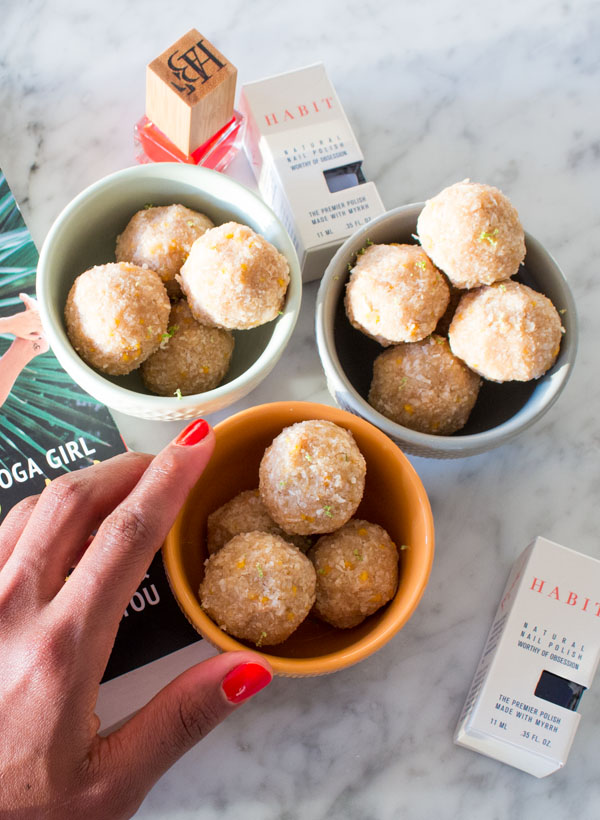
Raw Mango Macaroons & Habit Cosmetics Eco Vegan Nail Polish

These are a few of my favorite vegan and 5-free nail polishes. I chose which polishes to include in this video (and list below) based on the following requirements:

  1. Minimum 5-free formulation: This means that these polishes are free of the most toxic nail polish ingredients; Dibutyl Phthalate (DBP),Toluene, Formaldehyde, Formaldehyde Resin and Camphor. These toxins are known carcinogens, yet there are no laws limiting their use in beauty products.
  2. Vegan and cruelty-free: These polishes are not made using animal products and they were not tested on animals.
  3. Company offers a wide range of colors. 
  4. Long-wearing formulation: Meaning the polish will stay on for days.

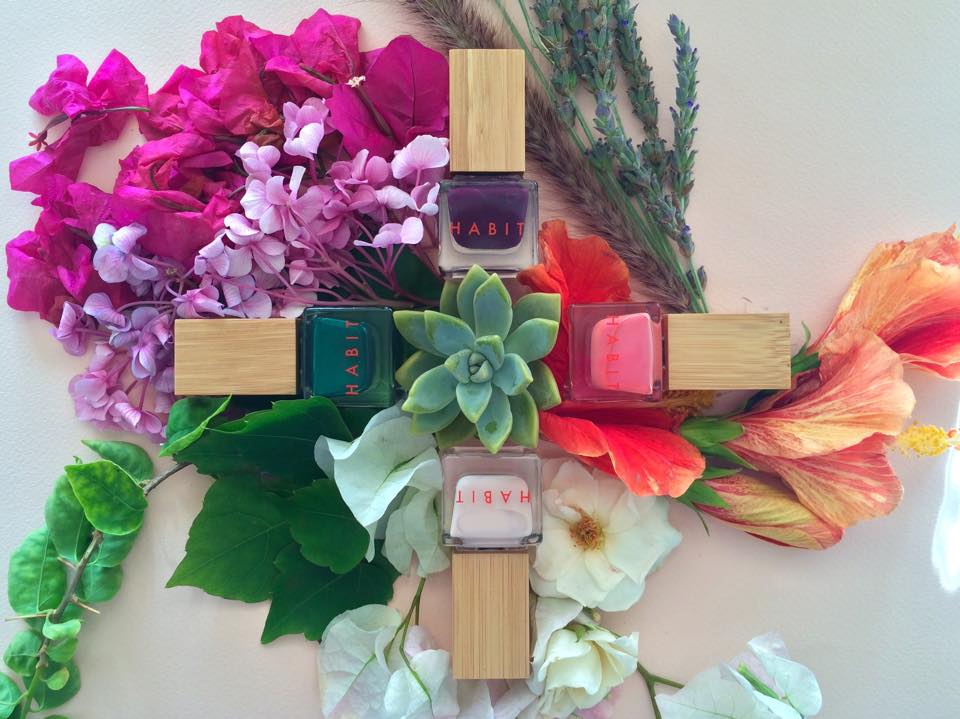
Habit Cosmetics Nail Polish

Vegan 5-Free Nail Polishes from the video:

HABIT COSMETICS. This is the first 5-free polish I tried. Founded in 2013, Habit makes gorgeous long-lasting colors. I especially love their nudes; Tan Lines and Ingenue are my favorites. It’s also great for your nails; myrrh is added to the formula for it’s strengthening and anti-fungal properties. Apparently Habit is the only US nail polish company to do that. I can speak from a year of experience, my nails are healthy and strong when wearing this brand. IN THE VIDEO WEARING: TANLINES & INGENUE

ginger and liz nail polish

GINGER & LIZ. In addition to their wide range of colors, Ginger & Liz sell a variety of other non-toxic nail and skin care products. This NYC based company is known for its rich and vibrant colors. IN THE VIDEO WEARING: HEALTH IS WEALTH

Smith and cult nail polish

SMITH & CULT. Red nail polish makes me feel glamorous and sexy, especially when it’s coming out of a luxurious Smith & Cult bottle. This brand takes non-toxic to the next level. Their polishes are 8-free meaning they are also free of xylene, ethyl tosylamide, and triphenyl phosphate. IN THE VIDEO WEARING: KUNDALINI HUSTLE

Floss and Gloss Nail Polish

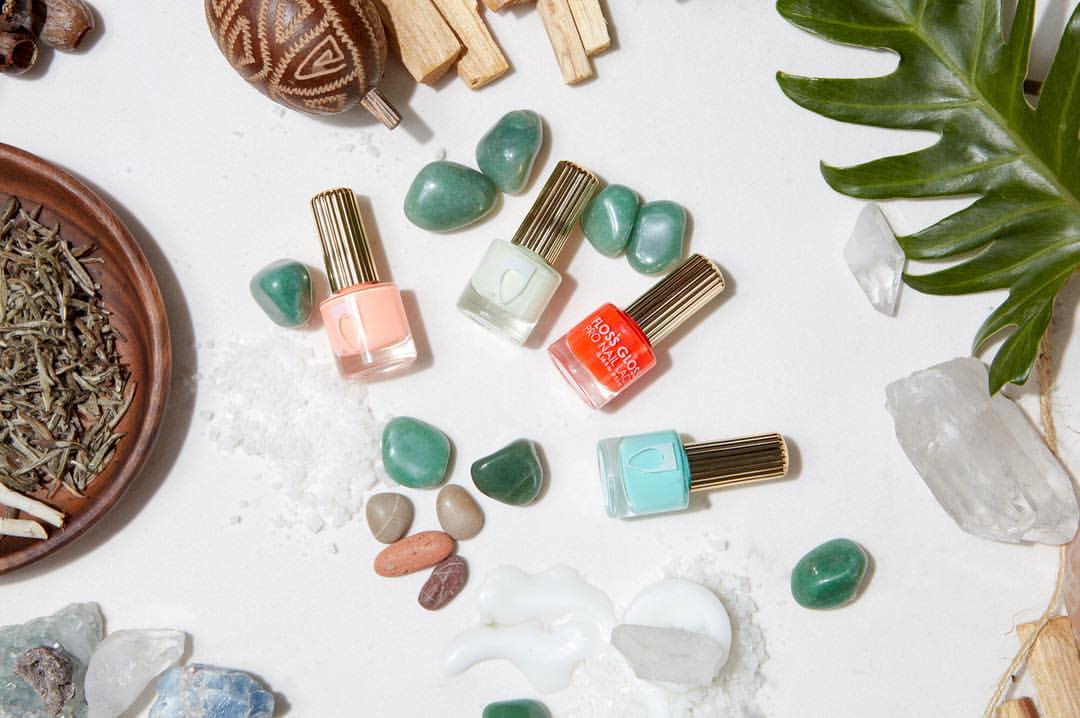
FLOSS GLOSS. This vegan polish is the cheapest of the bunch, just $8 bucks. I love their bright and summery colors and cute bottle (packaging is super important, isn’t it?). Their glitter polishes are stunning. I’m definitely looking forward to trying more from this brand. IN THE VIDEO WEARING: NEON NACHO

MORE VEGAN & 5-FREE NAIL POLISHES + average price (will update this list as I learn of more):

• LVX $18

• Ella Mila $10.50

• Sparitual $12

• Obsessive Compulsive Cosmetics $10

 • Zoya $10

• Aila $17

• NCLA $18

• Priti NYC $15

• Pacifica $9

• Julep $14

• Jamberry $15

• LACC $13

• RMS Beauty $15

• Mineral Fusion $8

The post Favorite Vegan & 5-Free Nail Polish {VIDEO + ROUND UP} appeared first on Sweet Potato Soul by Jenné Claiborne.


from Sweet Potato Soul by Jenné Claiborne http://sweetpotatosoul.com/2016/07/favorite-vegan-5-free-nail-polish-video.html
via Danmeri