Showing posts with label Feedly. Show all posts

Friday, 19 June 2015

You're So Vain, You Probably Think That Tweet Was About You...

Always Connected, Yet So Disconnected...

We live in a world where our social media lives bleed into our realities and enable us to hide. We hide behind our filtered images, the motivational quotes we do not actually live by, a false sense of friendships and strategically-timed posts. Essentially, the majority of us are on stage hiding behind the characters we wish to convey as our realities. In our generation, gone are the days of the heartbroken being forced to sit in silence and sulk or actually leave their homes to mingle. An ego boost or emotional band-aid is only a like, a follow or a friend request away. We remain so connected online that we are often entirely disconnected from ourselves.

A woman scorned can wipe the mascara stains from her eyes, proclaim online that she is "Ready to take the world by storm" and, thereby, convince herself that all is well in her artificially-constructed little life. However, just as flirtation, ego boosts and connecting with new conquests has become more convenient than ever, so has game-playing, passive-aggressive manipulation and vengeful, knife-turning opportunities.
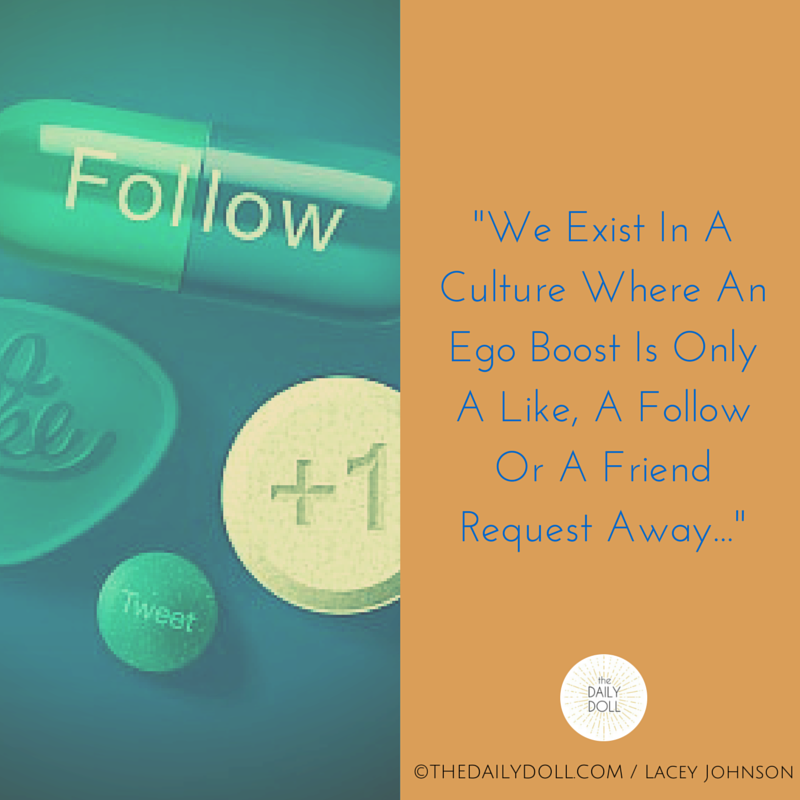
2015-06-19-1434730606-4839155-SocialMediaEgoBoost.png


People have become conditioned to avoid confrontation and, instead, use the untactful and passive-aggressive approach to gaining the attention of the object of their frustration by utilizing the ultimate of platforms: The Social Media Stage. We utilize it to proclaim our independence and newfound single-hood, we make declarations about ridding our lives of that which is not working, we whine about what those in our lives are not doing enough of, we strategically flaunt our victories in the faces of those who have disappointed us and, last but certainly not least, convey our angst to those we would rather not confront directly. How convenient, right?

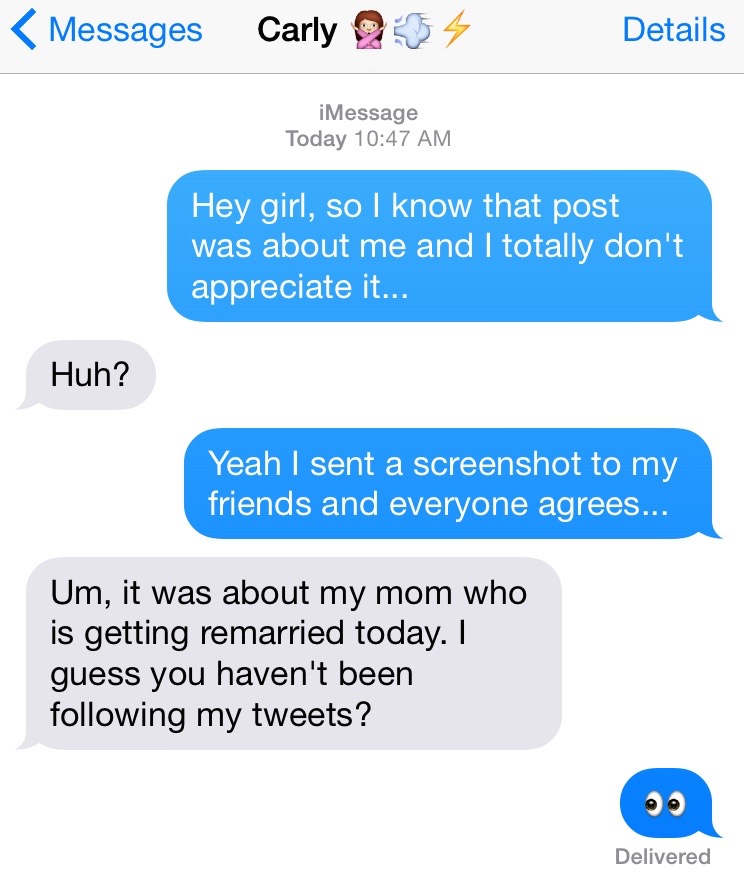
"So, Liiiike... Was That Post About Me?"

Have you ever been a victim of such passive-aggressive frustration? Almost 100 percent of the time, the poster anticipates the moment you will ask, "So, was that status about me?" If their post or tweet plants a seed of paranoia within you, it eliminates the need for them having to initiate the conversation at all. No awkward introductory speech nor preface is needed. Perhaps, even, their rant simply did not fit into the confines of 140 twitter characters. They may deny the post was ever about you at all. Either way, though, you know it was. You know that status was created for your eyes to see. You know that tweet was about you... don't you?

...Or, was it?
2015-06-19-1434732510-5745667-IMG_1476.jpg


Possibly, but not so fast...

I like to occasionally celebrate and document my life online, as well as vent frustrations I feel others may relate to. I enjoy proclaiming my victories, documenting my travels and adventures, passionately expressing my opinions, sharing my husband's odd idiosyncrasies and expressing my gratitude for those I love. It is also thrilling to have an audience, which is why I believe social media is as much fun as it is. We're all just sort of closet fame whores.

I have also come to realize, however, that not everyone is genuinely interested in my ever-changing hair color, philosophical rants, my most recently published article, my dog's spa day or the steak dinner I devoured on Valentine's Day. It's okay; I'm cool with it. Lack of interest from others is not going to stop me from sharing what I desire to share. I believe we all must come to understand that we do not need anyone's interest in our lives to validate the happiness or love within our lives.

Mic In Hand, So On This Soapbox I Shall Stand...
2015-06-19-1434731650-8706895-Yourbeliefs1.png


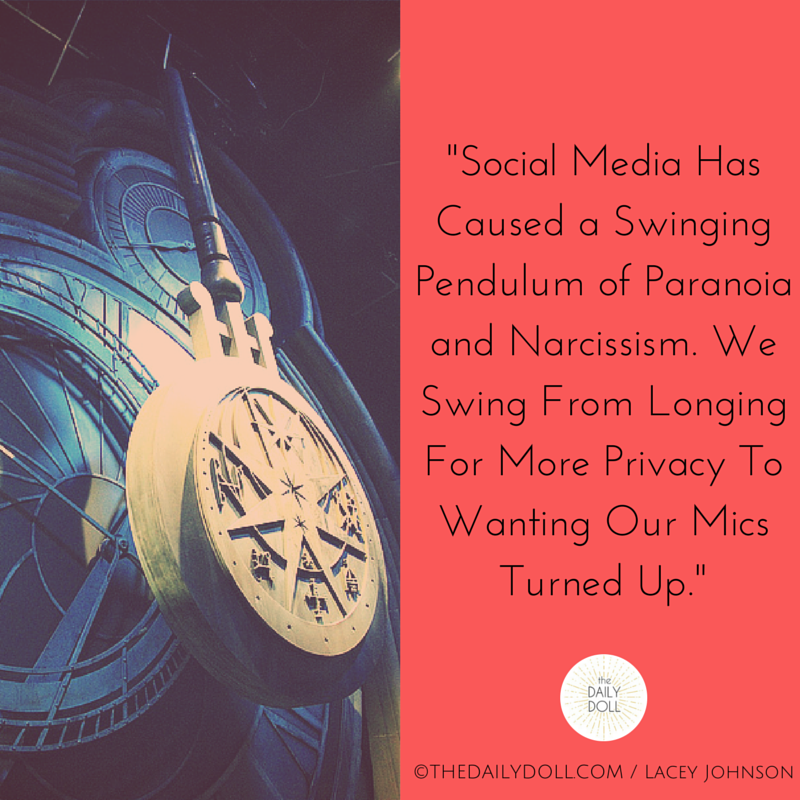
An unfortunate byproduct of our ability to step onto the social media stage and engage our audience at any time is that we have become quite the paranoid little culture. Insecurity and paranoia bleeds through our curiosities. Either not enough is about us or everything is. Either we are excluded or overexposed. Some find themselves measuring their friendships by who posts the most pictures of them or leaves ego-stroking comments the most often. The pendulum swings from paranoia to attention-seeking narcissism. Such extremes are a result of everyone's ability to always possess a megaphone to speak through and a soap box to stand on. Gone are the days of being forced to endure face-to-face confrontation or... gasp!... undocumented conversation.

Sadly, so often people assume something posted online is about them when it isn't at all. We have become so conditioned by our friends, frenemies and adversaries utilizing the social media stage that we have all become hypersensitive to what others post. Everyone wants to believe they are relevant enough to have provoked another to create a post about them, either good or bad. Truthfully, sometimes they are correct in their suspicions. Still, it's as though some people assume that if they mention an interest in camping or skydiving, everyone who then posts anything related to camping or skydiving is surely attempting to gain their attention. Usually it is those who are guilty of such manipulative social media behavior who assume everyone else is also.

People assume everyone is interested in what they post every day, all day long. People assume everyone is listening when the mic is in their hand. The truth is, though, people are often more concerned with what others are thinking about them. It doesn't mean they don't care about you; it just means people are more conscious of what is transpiring on their stage than on your stage.

We like images so that others will like our images. We favorite tweets so that others will favorite our tweets. We delete posts and tags so that our most flattering content shows the most relevance and is, therefore, showcased. I've known girls who have manipulated and orchestrated their image comments so that they appear more desirable to others. We unfollow those who unfollow us. It's as though we somewhat hold each other hostage to our social media accounts. It's vain. It's contrived. It's thirsty. It's inauthentic. It's narcissistic. It's exhausting. It's a total waste of time. Most of all, it's obvious.

We see through the transparency of the games others play online. Everyone knows better, yet we do it anyway. It's okay, though. Each of us are products of this social media-driven generation and, therefore, oftentimes slaves to our egos. So put your narcissistic hand in mine. We're in this together.

P.S. You're so vain, you probably think this article was about you...

I'm just being honest.

Read the original and extended version of this article by Lacey Johnson on The Daily Doll.

-- This feed and its contents are the property of The Huffington Post, and use is subject to our terms. It may be used for personal consumption, but may not be distributed on a website.


from Healthy Living - The Huffington Post http://www.huffingtonpost.com/lacey-johnson/youre-so-vain-you-probabl_b_7596056.html
via Spiritual Social Media

How to Know What Type of Fitness Training Is for You

Man, has fitness evolved over the last decade. It seems like a few years back, all you were doing was going into gyms and weight training on machinery as well as hitting a couple of Jazzercise classes (I've always wanted to say that word: Jazzercise... )

These days, it is normal to get confused with which avenue one should approach when it comes to getting into shape. So when you have all of these available to you:

  • Yoga (vinyasa, ashtanga, hatha, bikram , hot vinyasa, jivamukti)

  • Bootcamps

  • Weight Training

  • Interval Training

  • Suspension Training

  • Kettlebell Training

  • Spinning

  • Cardio Equipment (stepmills, ellipticals, treadmills, versaclimbers, airdyne bikes, rowers)


  • Battle Rope Training

  • Swimming


How do you know which method is best for you?

The first question to ask yourself is this:

What outcome do I want?


Do you want to improve body composition?
Do you want to improve overall functionality and movement?
Do you want to improve cardiovascular health?

Once you have the answer to this, you have someplace to start. Now, I'm not saying you can't work on all three at the same time, but for the purpose of getting targeted and focused, this is how I'll break it down:

Improving Body Composition

In order to improve body composition, you have to resistance train. Resistance training raises you BMR -- or basal metabolic rate. In layman's terms this is the amount of fat calories your body burns while at rest. Your BMR is higher during rest after weight training than after cardio alone, so you can see why resistance training is so crucial. (Gropper, Smith & Groff, 292) Some great tools to accomplish this are:

  • Weights

  • Kettlebells

  • Cables

  • Bands

  • Bodyweight


These are forms that I absolutely love and use every day with my clientele.

Improving Functionality and Movement

This is for the individual who is just feeling like he is not moving as well as he used to. This is the majority of the clientele that I see because let's face it, sitting in a chair eight hours a day will do that to someone. There are methods to help improve this that I love. The first way that I approach this would be by putting someone through a functional movement screening or a specific assessment. Any good strength coach or physical therapist can run you through this. You will then be able to determine what your weak points are and correct. If you do not have access to a specific screening, then there are some different methods I love to follow:


Improving Cardiovascular Health

My recommendation for a basic method to improve cardiovascular health is this: for three days out of your week choose one activity from below.

  • Running

  • Swimming

  • Biking

  • Paddleboarding

  • Hiking

  • Battle Ropes

  • Spinning

  • Cardio Equipment (stepmills, ellipticals, treadmills, versaclimbers, airdyne bikes, rowers)


Day one, pick something that you're able to do for a short period of time but intensely. This means 10 minutes or less. Day two, I want you to something at a medium intensity for up to 20 minutes. On day three, choose something you can maintain for 30-60 minutes at a very slow easy pace.

This is a very broad approach but it's great for the person who is just diving into all of this.

At the end of the day, training has got to be enjoyable. Even for my professional athletes who do this for a living, I find we have to keep things fun and interesting. So pick a goal and get focused, but always remember to have fun!

Stay posted with the latest from Don:
Instagram
Twitter
Facebook


Works Cited
Gropper, Sareen S, Jack Smith and James Groff. Advanced Nutrition and Human Metabolism. Canada: Wadsworth Cengage Learning, 2005, 2009. Print.

-- This feed and its contents are the property of The Huffington Post, and use is subject to our terms. It may be used for personal consumption, but may not be distributed on a website.


from Healthy Living - The Huffington Post http://www.huffingtonpost.com/don-saladino/how-to-know-what-type-of-fitness-training-is-for-you_b_7621762.html
via Spiritual Social Media

Tapping into the Power of You: Resistance in Finding Your Tribe

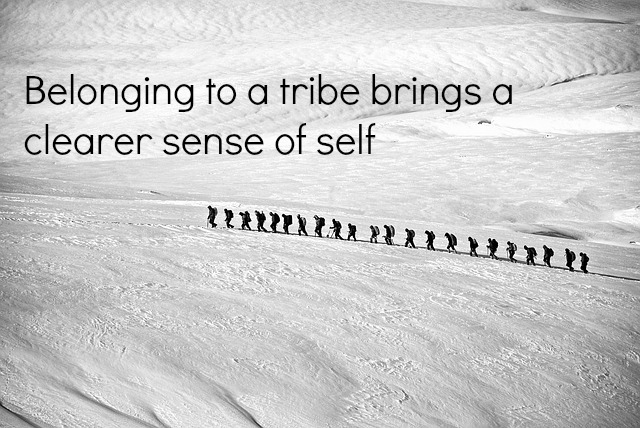
Humans are social beings. We, by nature, have a need to be with others. Finding one's tribe is paramount to feeling like we belong somewhere. When we feel included in a tribe we not only have a better sense of self but we also become more self-confident.

I tend to use the word tribe because it really gives a good visual of what a group of people with the same commonality, such as, a hobby, an interest, an illness or a stage in one's life, looks like.

2015-06-19-1434735566-8431187-tribe.jpg

Loneliness can stem from feeling like you do not belong to a tribe. It is from feeling isolated or lacking companionship. You may feel like you are the only one who may be like this and no one else can relate to you. People can still feel alone in a room full of people it they feel that they have nothing in common with anyone there.

For some to go out there and meet people it is difficult. A lot of people find social settings uncomfortable. But even introverts need to find a tribe. Little do they know that they are already in one -- with other introverts!

The internet, in a way makes this world smaller -- allowing us to connect with people from all over the world. To some, it can be intimidating because the virtual world feels infinite and may seem almost impossible to find these pockets where one can connect with people they can relate to.

Still some feel that sitting in the safety of their home with the computer between them and someone else doing the exact same thing does not create real bonding between them. This is just not true. I myself play Word with Friends with a grandfather from Ireland for about a year now. Although we are thousands of kilometers away from each other, with a six hour time difference, we still get a chance to enjoy a drink together. He shares stories when his grandchildren come to visit that we both laugh about. I mourned with him when he lost his sister. I talk about him with friends. If we do not play for a while I reach out and ask him if everything is okay. Will we ever meet in real life? I doubt it. Do I consider him a friend? You betcha! Why, you may ask? Because I enjoy playing and chatting with him. I like the relaxed camaraderie I have with him and I miss these times when we don't play for a while.

There are other reasons that people are resistant to connect with others online. Why? For fear of people not liking them. For fear of not fitting in anywhere. For the simple fear of not knowing the person first and trusting them.

The virtual world is not so different then the real world. The same as you would in real life you would apply to the person you meet on line. Don't share personal information initially. Use precaution when speaking to others and when you feel there are red flags going up, trust your instincts.

That said, online is relatively safe because you are in complete control of where you meet people, who you want to connect with and how you want to. It is much easier to block someone on the internet than in real life!

Facebook groups are a great place to go since most are private or closed. This means that you have to be approved to be part of the group and no one outside of the group can see what is being discussed. Inclusion to these group is welcoming and unconditional.

You don't need to be alone. There is a group out there for everyone. The internet really makes it quite easy to find your tribe. It will increase your self-confidence and give you a sense of self.

What is nice about virtual friends is that you get to know them so much faster than in real life. Your online tribe is there 24/7 with people in different time zones. I myself have virtual friends from all over the world. Some I have met in real life and we have continued our real friendships through the use of Skype, Viber and Google Hangout since we are unable to see each other in real life often.

I have written about finding your tribe through social media in a book I co-authored, Empowering Women Through Social Media. I was asked to be part of a free telesummit, Shift It: Transform Your Thinking; Transform Your Life to speak further about this. Along with other professionals I talk about tapping into your authentic self, to regain your power and be happy. This tele summit continues for the rest of this month, with my episode, on Finding Your Tribe, airing June 29th. To find out the whole list of experts and their area of expertise, click on this link to sign up for the Shift iT telesummit.

-- This feed and its contents are the property of The Huffington Post, and use is subject to our terms. It may be used for personal consumption, but may not be distributed on a website.


from Healthy Living - The Huffington Post http://www.huffingtonpost.com/audrey-van-petegem/tapping-into-the-power-of_b_7623216.html
via Spiritual Social Media

The Reality of Real Food – Episode 38

The Reality of Real Food with Kelly the Kitchen Kop

Have you ever met a friend online and had an instant connection? And then met in real life and realized that you could chat for hours over some healthy real food coffee? That is how I feel about today’s podcast guest, Kelly (the Kitchen Kop), author of the book Real Food For Rookies. Kelly and...

The Reality of Real Food – Episode 38 originally appeared on Wellness Mama.


from Wellness Mama http://wellnessmama.com/podcast/reality-of-real-food/?utm_source=rss&utm_medium=rss&utm_campaign=reality-of-real-food
via Spiritual Social Media

Boy With Down Syndrome Tells His Dad He's 'Doing A Great Job' For Father's Day

Father's Day is a time to celebrate and express gratitude to dads, including dads of children with special needs.

Told from the perspective of a boy with Down syndrome, this sweet video from the Jerome Lejeune Foundation is a moving tribute to his loving father who is smart, silly and supportive. "I wanted to tell you," the boy says, "You are doing a great job!"

So sweet.


Like Us On Facebook |
Follow Us On Twitter |
Contact HuffPost Parents

-- This feed and its contents are the property of The Huffington Post, and use is subject to our terms. It may be used for personal consumption, but may not be distributed on a website.


from Healthy Living - The Huffington Post http://www.huffingtonpost.com/2015/06/19/fathers-day-down-syndrome-video_n_7615608.html
via Spiritual Social Media

Random Act of Self-Love

"If your compassion does not include yourself, it is incomplete." ~Jack Kornfield


We have all heard about random acts of kindness. We've probably all -- at some point or another -- been a giver or a receiver of these little, big and sometimes life-changing moments.

The simple act of doing thoughtful, unexpected good deeds for others can fill us with joy. And when someone reaches out, out of the blue to touch us in some way, it's something we rarely forget.

No matter what end of the act of kindness you are on, they are usually moments filled with ease, grace and love.

Acts of kindness come to us naturally, without effort or much thought. An opportunity presents itself and we act swiftly and whole-heartedly. We don't think; we just do.

Recently a friend confided to me that she needs more time for herself. She has a demanding schedule and kids she cares for so I understand why it 's difficult for her to find time alone. It's more than that, though. In listening to her, I realized she isn't being kind and giving herself the simple joys she's craving.

I thought of how she often extends generosity towards me -- a cup of coffee, a listening ear, a meal shared.

I wondered -- what if now and then she surprised herself with a random act of kindness -- for herself?

What if now and then we all gave ourselves a random act of self-love?

I'm not talking about spoiling ourselves, giving in to our every whim or over-indulging. I'm referring to being honest with ourselves. So often we put our needs and wishes on the backburner and neglect our desires because we're afraid to authentically acknowledge them.

Giving to ourselves should be a regular part of our lives. While some of us are better at this than others, for many of us, this idea feels absurd. We worry how it may look, what others may think or we feel guilty. We worry we are being selfish or that others will perceive our actions as self-absorbed.

But there's nothing wrong with giving to ourselves.

We must recognize there's a difference between being selfish and simply being in tune to our needs. Selfish acts of living are not the same as self-loving acts of being. When we are in tune to our needs, our wants, our big dreams and our silly, frivolous pleasures, we feel more joyful, more positive and more fulfilled.

That's a wonderful thing.

There's another benefit to tending to ourselves first, though. When we are energized and content it's easier for us to care for others and give in a loving spirit. The energy we extend to ourselves and to the world is constantly being reflected back on us. This means when we love ourselves, without terms or conditions, the door opens for others to do the same.

Loving ourselves in a natural, non-selfish way attracts more love, more happiness and more opportunities to spread love to those around us.

Of course there are substantial ways we can care for ourselves. Maybe the way you show love to yourself is by setting aside time every day that is only for you. Maybe you take a vacation as often as possible.

But random acts of self-love can more commonly be found in the little, day-to-day moments when you don't think, you just do. Maybe that means treating yourself to your favorite meal, reading with a cup of tea, making the time for an invigorating work-out, or simply extending the same kindness, love and forgiveness to yourself that you so readily give to others.

It's the little pleasures and the little acts of love that can add up to more satisfying, happier, positive-filled days. You wouldn't think twice about doing it for someone else, so don't think, question or doubt your intentions for yourself.

Continue to give random acts of kindness for others throughout your days. But while you are doing that, don't forget to give a random act of self-love to yourself.

Except, try not to make it random. Try to make acts of self-love a habit.

In doing so, random acts of self-love, like acts of kindness, will eventually come to you naturally, without effort or much thought.

-- This feed and its contents are the property of The Huffington Post, and use is subject to our terms. It may be used for personal consumption, but may not be distributed on a website.


from Healthy Living - The Huffington Post http://www.huffingtonpost.com/angie-sarhan/random-act-of-self-love_b_7622774.html
via Spiritual Social Media

4 Women Hilariously Investigate Push-Up Bras

From fur-covered to gem-encrusted, bras come in all sorts of textures, shapes and sizes.

In a new video, BuzzFeed Yellow had four women try on and react to three different types of push-up bras all pledging different degrees of enhancement.

The women were confused, amused, and freaked out by the bras. "This is like NASA technology that we now use to hold up people’s tits," one woman said about the gel push-up.

While the gel and water bras were funny and entertaining, a certain "Bombshell bra" in particular was the most perplexing. "Where does your boob go?" one woman asked before actually trying it on. "I feel like I’m strapped into a bulletproof vest right now because that’s how thick these things are," another woman joked.

A different participant raised the issue of hooking up while wearing this bra, saying that she would "be so nervous and so self-conscious that my actual boobs were gonna disappoint." But at the end of the video, we're reminded that "If somebody gets to see your boobs they’re gonna be excited. So just take the bra off, live your best life. They’re not gonna be like 'Whoa that was a lot of padding!'"

"Nothing looks so sexy as just being naked," one woman noted. And you don't need a push-up bra for that.

-- This feed and its contents are the property of The Huffington Post, and use is subject to our terms. It may be used for personal consumption, but may not be distributed on a website.


from Healthy Living - The Huffington Post http://www.huffingtonpost.com/2015/06/19/women-try-pushup-bras_n_7621128.html
via Spiritual Social Media

How 36 Women React To The Word 'Abortion'

A new video shows the varied ways women feel about reproductive rights.

In the latest video from their "One Word" series, Cut Video asked 36 women, from ages 15 to 50, to respond to the word "abortion." The participants were asked to share the first thought that came to mind when they heard the term.

Those involved shared a wide scope of views. Many, like 22-year-old Madison, responded that abortion is a woman's right.

"[It's] her choice," said 32-year-old Maureen. "At one week, or 20 weeks. It's up to her."

Others were staunchly anti-abortion. Fifteen-year-old Melissa described abortion as "killing," because "They're basically killing the baby. Even though it's still in the mom." Anna, age 20, responded that abortion is "wrong."

"I've always been pro-life," she said. "I feel like when people are pro-choice, they always just think of the mom... people don't think about the person that's inside of you, or the life that doesn't have a voice."

Ten women interviewed associated the word "choice" with abortion. However, the video reminds us that a woman's right to choose is still far from being accepted across the board -- even by women themselves.

Watch the full video above.

-- This feed and its contents are the property of The Huffington Post, and use is subject to our terms. It may be used for personal consumption, but may not be distributed on a website.


from Healthy Living - The Huffington Post http://www.huffingtonpost.com/2015/06/19/this-is-how-women-react-to-the-word-abortion_n_7620798.html
via Spiritual Social Media

The LeanChair Lets You Sit, Stand And Work At The Same Time

There are standing desks, treadmill desks and "breathing" desks, and now there is a leaning desk.

It's called the LeanChair, and the inventor, software developer Wayne Yeager, is raising money for it on Kickstarter. The LeanChair had raised more than $29,000 as of Friday afternoon, smashing its goal of $25,000 with 23 days left to go.

This is what it looks like:

leanchair
leanchair

"While I'd seen all the articles about how bad sitting was for me, I just could not get any real, serious work done at a standing desk," Yeager says in his fundraising video. He figured out that if he leaned back on an angled platform, standing wasn't so difficult. He describes it as a middle ground between sitting and standing.

The LeanChair takes 25 percent of your "perceived body weight" off of your feet, Yeager claims, making your body feel a bit lighter and making standing easier.

Yeager is right about the problems that sitting too much can cause. Studies have shown that sitting down for long periods of time increases your risk of cancer, heart disease, obesity and more.

Of course, there haven't been any studies performed on the LeanChair, so it's unclear if it's actually the healthiest alternative to sitting. But it may be the solution some people are looking for.

-- This feed and its contents are the property of The Huffington Post, and use is subject to our terms. It may be used for personal consumption, but may not be distributed on a website.


from Healthy Living - The Huffington Post http://www.huffingtonpost.com/2015/06/19/leanchair_n_7620854.html
via Spiritual Social Media

Green Spaces In Schools Improve Children's Memory And Attention

Children today spend less time outdoors than ever before -- and it may be detrimental not only to their physical health, but also to their cognitive development.

A yearlong study, recently published in the Proceedings of the National Academy of Sciences, found that elementary school children who were exposed to more green spaces within or directly outside their school showed improved learning and memory.

The findings reinforce that of a recent six-year study on 905 Massachusetts public elementary schools, which found that students in schools that had more "greenness" in their surroundings reported higher scores on standardized testing in English and math.

"There is an expanding body of scientific evidence linking the human experience in the natural world to better physical and mental health and enhanced cognitive abilities," journalist Richard Louv, co-founder of the Children & Nature Network author of Last Child in the Woods: Saving Our Children From Nature-Deficit Disorder, said in an email to The Huffington Post. "An increasing number of homeschoolers, nature preschools, independent primary and secondary schools, and forward-thinking public schools are incorporating nature experience into learning."

The new study was conducted on more than 2,500 children in second, third and fourth grade at 36 primary schools in Barcelona, Spain. At the outset of the study and again 12 months later, the children were given computerized tests measuring cognitive functions, including working memory (a measurement of short-term memory) and attentiveness. The researchers also measured the green spaces within and surrounding each school.

They found that the students who attended schools with more green spaces showed a 5 percent improvement in working memory, a type of short-term memory that's critical for reasoning, learning and comprehension. Their inattentiveness also decreased slightly.

Why? It's possible that being in green spaces increases physical activity, which is known to improve children's cognitive performance. And as Louv notes, playing outside itself allows children to exercise important cognitive functions.

"The evidence strongly suggests that the natural world increases physical competency linked to mental acuity, increases ability to see patterns where others see chaos, offers new disciplines to collect and perceive knowledge and apply it, and expands the palate of possibilities," said Louv, who wasn't involved in the study.

Protection from pollution is another factor. The researchers estimated that reductions in exposure to traffic-related air pollution might account for anywhere from 20 to 65 percent of the improvements in cognitive development.

Spending time outside could have a number of benefits for children beyond improved memory and attention. Another recent study found that adventurous outdoor play -- such as climbing, rough and tumble play, and exploring alone -- improves children's physical health while also helping them develop creativity, social skills and resilience.

"Natural environments including green spaces provide children with unique opportunities such as inciting engagement, risk taking, discovery, creativity, mastery and control, strengthening sense of self, inspiring basic emotional states including sense of wonder, and enhancing psychological restoration," the study's authors write.

When children don't get enough outside time, they're at risk for developing the unscientific but all-too-real affliction that Louv calls "nature deficit disorder," referring to the costs of being alienated from nature, especially in one's developing years.

Fortunately, some schools are starting to take notice, creating more spaces for children to enjoy being in nature, including community gardens, outdoor playgrounds and small parks.

"There’s increasing interest in increasing the amount of natural environments in education -- not only for teaching about nature, but to help increase students’ ability to learn about all topics," Louv said. "Nature experience isn't a panacea, but for many kids it surely helps."

-- This feed and its contents are the property of The Huffington Post, and use is subject to our terms. It may be used for personal consumption, but may not be distributed on a website.


from Healthy Living - The Huffington Post http://www.huffingtonpost.com/2015/06/19/green-spaces-schools_n_7594882.html
via Spiritual Social Media

Emma Stone Opens Up About Her Panic Attacks

Goofball Emma Stone seems like a woman without a worry in the world, but apparently, that's just what we see on the outside. Before all her success as an actress, she suffered from some really...

from MindBodyGreen http://www.mindbodygreen.com/0-20419/emma-stone-opens-up-about-her-panic-attacks.html
via Spiritual Social Media

Sitting Too Much Could Be Wrecking Your Mental Health

Here's a PSA if you're thinking about lounging around all weekend: Sitting too much may be associated with an increased risk for anxiety, according to new research.

Researchers in Australia at Deakin University's Center for Physical Activity and Nutrition Research found that sedentary behavior -- think excessive TV watching or working at a computer all day -- may have a negative effect on mental health.

The Background
There is a well-established body of research that links sedentary activities to an increased risk of physical health problems such as heart disease and high blood pressure, but less is known about the mental health repercussions of not being active, the researchers stated. This is the first review to take an extensive look at the relationship between anxiety and inactive behavior, according to the researchers.

The Setup
Researchers reviewed nine separate studies that took an in-depth look at anxiety as it related to total sitting time for low-energy activities like watching TV and playing electronic games. Seven of the studies were strictly limited to adult participants, but two of the studies included teens and children.

The Findings
The results, which were published in the journal BMC Public Health, found an association between sedentary behavior and increased anxiety in five of the nine studies. The total amount of sitting time also seemed to be a factor in four of the nine studies.

However, the researchers note that since the studies reviewed were cross-sectional -- meaning they were conducted based on interviews rather than using a controlled study environment -- more follow-up studies are needed to confirm if anxiety is caused by inactive behavior. Given that millions of people are affected by anxiety disorders, it's an area the study authors are pushing to explore further.

"It is important that we understand the behavioral factors that may be linked to anxiety in order to be able to develop evidence-based strategies in preventing and managing this illness," lead researcher Megan Teychenne, a lecturer at the Centre for Physical Activity and Nutrition Research, said in a statement.

The Takeaway
The study joins a host of other research that supports an active lifestyle when it comes to mental health. Studies suggest just walking in nature for a few minutes can boost your mood and physical exercise has been shown to decrease depressive symptoms. Too much tech use may also influence mental health.

In other words, you may want to forego that Netflix binge -- your body and your brain will thank you for it.


Follow Us On Pinterest
| Like Us On Facebook |
Follow Us On Twitter

-- This feed and its contents are the property of The Huffington Post, and use is subject to our terms. It may be used for personal consumption, but may not be distributed on a website.


from Healthy Living - The Huffington Post http://www.huffingtonpost.com/2015/06/19/anxiety-sedentary-lifestyle-sitting-too-much-mental-health_n_7622292.html
via Spiritual Social Media

The Why And How Of Altruism: A Conversation With Matthieu Ricard (All Together Podcast)

Why do we do good and is there a way we can do more of it? In his important new book, Altruism, Matthieu Ricard lays out the scientific and ethical framework for how we can change ourselves and the world with intentional compassion.

Welcome to this week's All Together, the podcast dedicated to exploring ethics, religion and spiritual practice. Please download All Together on iTunes, or Stitcher.

Matthieu Riccard is a Buddhist monk originally from France who lives mostly now in Nepal. Before becoming a monk he got a Ph. D. in molecular genetics and his writings are filled with scientific data to back up his ethical and spiritual claims. His book before Altruism was called Happiness, which he also knows something about as he was declared the Happiest person on the planet by scientists at University of Wisconsin in Madison.

I had a chance to speak with Mess. Ricard about his new book and the urgency he feels about how altruism is needed to transform us as individuals and to help our ailing planet.

-- This feed and its contents are the property of The Huffington Post, and use is subject to our terms. It may be used for personal consumption, but may not be distributed on a website.


from Healthy Living - The Huffington Post http://www.huffingtonpost.com/paul-raushenbush/matthieu-ricard-altruism_b_7620952.html
via Spiritual Social Media

This Is What Being A Latino Dad Means Today

Padre, papi or papá are all synonymous with being a Latino dad, but the true meaning of fatherhood goes beyond the words children use to call their father.

In honor of Father's Day, HuffPost Latino Voices asked our readers to show us what having or being a Latino father means to them by using the hashtag #LatinoDadsAre. Dozens of people shared beautiful pictures of Latino fathers and the loving words that describe them.

Take a look at what Latino fatherhood means today below:


-- This feed and its contents are the property of The Huffington Post, and use is subject to our terms. It may be used for personal consumption, but may not be distributed on a website.


from Healthy Living - The Huffington Post http://www.huffingtonpost.com/2015/06/19/what-latino-fatherhood-means_n_7614532.html
via Spiritual Social Media

12 Healthy Swaps in Time for Summer

Summer is right around the corner, marking a time of barbecues, outdoor eating and gatherings with family and friends. It is also means going to the beach and wearing (while also feeling comfortable in) your favorite bathing suit.

To enjoy the summer season and social gatherings that go along with it, it is important to make healthy food and lifestyle choices. It is no surprise that as a practicing nutritionist, this is one of my busiest seasons.

Here are several healthy -- and simple -- swaps to make this time a healthy season. Try to incorporate at least one swap per day and you will be on your way to a healthier summer.

1. Wake up practicing gratitude instead of complaining.

Be grateful for the good things in your life, instead of the bad things. While we can all finds things in our lives that could be better, things could also be a lot worse. Starting your day with a grateful heart opens us up to receive all of the miracles that life has to offer.

2. Start your day with a bowl of oatmeal instead of a bowl of granola.

Not only is oatmeal filling and contain fiber, it's also lower in calories and sugar, when compared to granola. While a half cup serving of oats contains just 1 gram of sugar, many varieties of granola contain upward of 10 grams of sugar.

Oatmeal is a good source of soluble fiber, shown to reduce cholesterol levels. The type of fiber in oatmeal, beta glucans, may be particularly beneficial for heart health and also for weight control. Oatmeal also contains minerals, including magnesium and potassium, which promote heart health.

3. Top your oatmeal with fresh blackberries instead of sugar.

Blackberries taste sweet and are high in antioxidants and fiber while adding bulk to your portion of oatmeal. Sugar, on the other hand, is nothing more than empty calories

4. Drink sparkling water instead of soda.

Soda contains pure sugar, is liquid candy and a waste of calories. Swapping soda for sparkling water can save you hundreds of calories. For flavor, add a splash of lemon, lime or cucumber or throw in a few fruit flavored ice cubes (pour your favorite juice into an ice cube tray and freeze).

5. Eat a salad made with kale instead of iceberg lettuce.

In general, the darker the green, the more nutrients it contains. While iceberg lettuce is mostly water, kale is richer in nutrients and antioxidants such as folate, fiber, and vitamins A and C.

6. Top your salad with grilled salmon instead of steak.

Salmon contains heart healthy omega-3 fatty acids known to prevent blood clots and promote heart health. Red meat, including steak, on the other hand, is high in saturated fat.

7. Toss cherry tomatoes instead of croutons into your salad.

Adding tomatoes to your salad will boost your intake of antioxidants such as lycopene and vitamin C without contributing too many calories. Croutons, on the other hand, contain few nutrients and are mostly empty calories.

8. Take the stairs instead of the elevator.

Engaging in unstructured exercise such as taking the stairs or parking your car a few blocks away from where you are going is a great way to rev up your metabolism. Taking the stairs is also a great way to boost lean body mass.

9. Snack on peanuts instead of chips.

Hungry for a snack? Adding a handful of peanuts to your diet is a great way to boost your intake of healthy unsaturated fats which may benefit the brain as well as the skin. Peanuts are also rich in the antioxidant vitamin E. And even better, eating peanuts may protect against major causes of death.

10. Eat 'spaghetti' primavera made with spaghetti squash instead of white pasta.

Not only will you save lots of calories by swapping pasta for spaghetti squash, the squash will also give you a healthy helping of folate, vitamin C, fiber and magnesium. And even better, you can enjoy a generous portion without having to worry about gaining weight.

11. Enjoy fresh corn on the cob instead of mashed potatoes.

It's great to take advantage of produce in season. Corn on the cob is fresh and sweet while also containing a healthy dose of fiber. It is also portion controlled so it is hard to overdo it as you would mashed potatoes.

12. Swap your salt for a dash of turmeric.

Cooking with herbs and spices is a great way to reduce the amount of salt you ingest. Turmeric, in particular, not only adds a zesty flavor but it also contains anti inflammatory properties which may promote health.

Wishing you a wonderful summer. We would love to hear your favorite summer swaps.

-- This feed and its contents are the property of The Huffington Post, and use is subject to our terms. It may be used for personal consumption, but may not be distributed on a website.


from Healthy Living - The Huffington Post http://www.huffingtonpost.com/dr-lisa-young/12-healthy-swaps-in-time-_b_7618120.html
via Spiritual Social Media

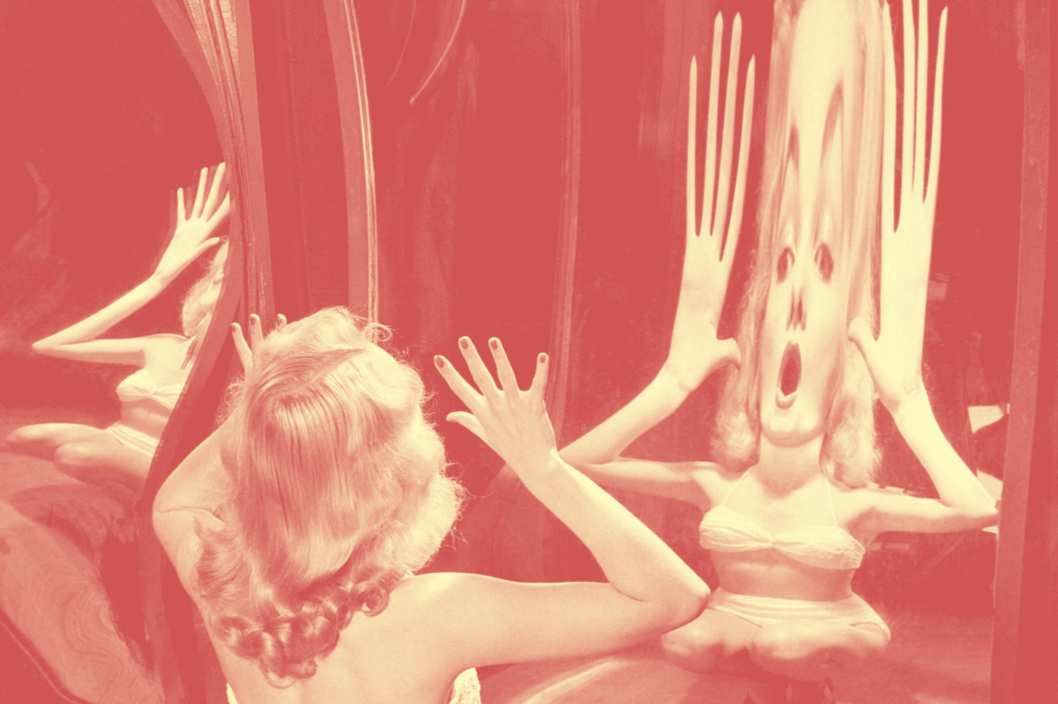
The People Who See Monsters in the Mirror

2015-06-19-1434672374-3922323-15bodydismorphicmirror.w529.h352.2x.jpg
(Photo: Bettmann/Corbis)

By Melissa Dahl

People with body dysmorphic disorder have what you might call a complicated relationship with mirrors, to put things mildly. BDD, a psychiatric condition marked by a preoccupation with perceived flaws in one's personal appearance, is the subject of a new paper published in the Journal of Health Psychology, spotted earlier today by Science of Us pal Christian Jarrett over at BPS Research Digest. (You can read the full journal article here, if you'd like.) In it, researchers from City University London share pieces of their interviews with ten BDD patients, specifically their feelings toward mirrors.

Related: The Strange Case of the Woman Haunted by Dragons

On the one hand, they hate them. One study participant named Jane called mirrors "the bastards" and can't stand that they are "fucking everywhere." And yet many of them are drawn to mirrors in ways those of us without BDD are not. A BDD sufferer named Louise told the researchers she'd once stared at her own reflection for 11 hours; Jane one day counted the number of times she looked at herself in the mirror and lost count at 68.

Ten people is not a huge number, so the researchers caution that there's only so much we can extrapolate from these interviews; as always, more research is needed. But it's an important step toward understanding more about what people with BDD see when they look at their own reflections.

Related: The Woman Whose Brain Gave Her a Fake Accent

Here are some of the most compelling quotes from those interviews:

Chris:

I look like a monster[.] I just don't feel sort of human ... sometimes I really feel that kind of, I look diseased, like people in movies when they kind of make them up and it's like I should be groaning.

Louise:

I once stared at myself in the mirror for eleven hours. When I look in the mirror I can't go again until I've kind of made peace with the picture that I see there, so sometimes that can just take a couple of minutes, five minutes, ten minutes like anybody would. Perhaps if I am not at all stressed or anxious, sometimes I can just look and think 'yeah, ok, that will do', and I'll go and then another time I just can't get to that point, I just can't get to the point where I feel good enough to be able to go out and let anyone see me. And that will go on and on and on, and the longer I've stayed there, the more distorted everything becomes and the worse it gets ... And during that time when I am stuck I can't do anything, I can't pick up the phone, I can't walk to open the door if someone comes round to try and help me, I can't drink anything or eat anything or go to the bathroom. I am just stuck there completely.

Lucy:

Everyone else, everyone is beautiful. I just feel that I am that one ugly person, and I am with all those people who like say, the Tree Man or the Elephant Man, I am in their league ... I see myself as lower than everyone else. Basically, I should be with the freak show ... because I remember always watching those films and they had that really big fat lady and I think that should be me.

Jane:

Fuck knows why you do it. I really can't explain to you why I have to look in the mirror so often ... There was one time when I stopped counting at like, I think it was about 68 times, and it was just sort of like, and at that time I wasn't even planning to leave the house.

Hannah:

I do feel kind of bereft if there are no mirrors. I feel really like kind of an addict without their drug. It's just like I need to look, in the same way that in the morning that needs to be the first thing I do. I couldn't possibly fathom talking to someone or yeh doing, you know. And that's why I really struggle with the idea of relationships and continuity, anything that becomes something regular where you can't just get away with staying over and then just leave now.

More from Science of Us:

What It's Like to Have Severe Lyme Disease
What It's Like to Be Allergic to Wi-Fi
The Waking Nightmare of Restless Leg Syndrome
Why Hiding Your True Self Feels So Terrible

-- This feed and its contents are the property of The Huffington Post, and use is subject to our terms. It may be used for personal consumption, but may not be distributed on a website.


from Healthy Living - The Huffington Post http://www.huffingtonpost.com/science-of-us/the-people-who-see-monsters-in-the-mirror_b_7617530.html
via Spiritual Social Media

Eat the Rainbow -- 5 Tips for Rebooting Your Body This Gay Pride

June means rainbow flags as far as the eye can see. For me, the rainbow is an especially important sign. It of course represents the diversity of the gay community. It is also the flag of Cuzco in my home country of Peru, where it symbolizes the ancient Incan empire. But more than that, the rainbow also signifies the health benefits of eating a full spectrum of natural foods. This June, I invite you to rejuvenate yourself with a rainbow reboot.

A reboot is not a detox. No food can remove impurities from your body. Your organs do that, and as long as they are functioning properly you are detoxing naturally all the time. Still, a diverse and healthy diet can support your organs in their work. It can also help build up your system to defend against toxins or repair damage they create. As I discuss in my latest book, Whole Body Reboot: The Peruvian Superfoods Diet, nutrition can give your body support, and a boost of healthy energy. That's what I mean by a reboot -- not stopping eating, but eating better. One easy way to get the healthy, sustaining nutrients you need is to make smoothies.

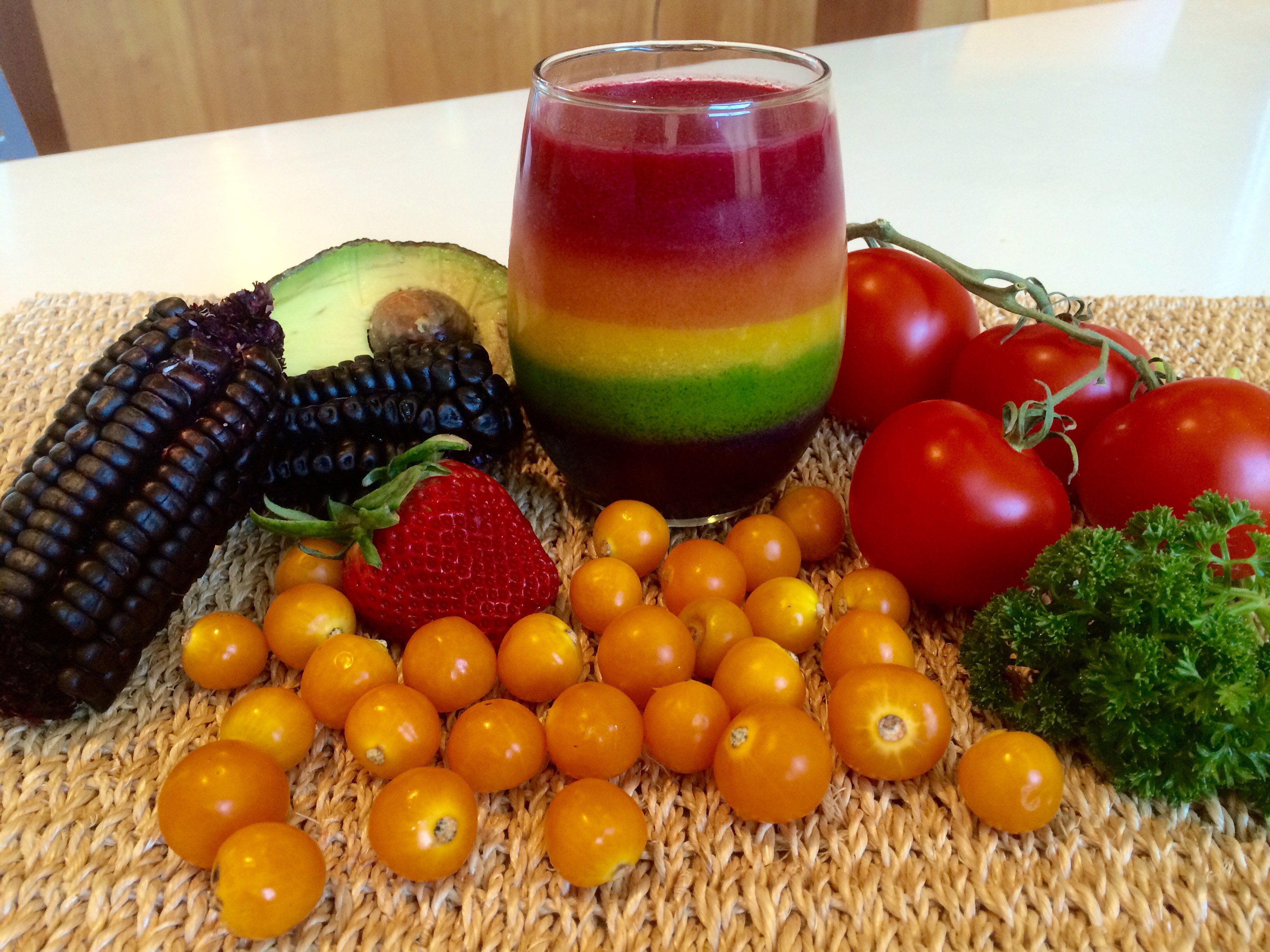
Smoothies made of the full rainbow spectrum of foods can boost your immune system and support the repair processes in your cells. That's because the phytochemicals that give plants their color -- the blue in your blueberries, the orange in your carrots -- have antioxidant effects, helping to clear away the free radicals in your body. A free radical is an unstable molecule that latches onto healthy cells making them unstable as well, even to the point of contacting our DNA and mutating the strains. The antioxidants in anti-inflammatory fruits, vegetables, herbs, whole grains, and fats can help reduce the number and effect of free radicals by neutralizing free floating free radical throughout the body. But each phytochemical has different strengths, which is why you need to eat a rainbow of them, not just one.

Anthocyanins, for instance, provide the purple in blueberries, some raspberries, or purple potatoes. They have powerful antioxidant effects. Carotene, which gives carrots and orange melons their color, has also been shown to preserve cognitive function as we age. Lycopene, which makes tomatoes red, has been shown to reduce cholesterol in the blood. But these effects are also cumulative. No single food is a magic bullet. But all of these healthy pigments together can provide support for your body. That's why you don't just want to use green vegetables in your smoothie. You want the full diversity of the rainbow.

2015-06-14-1434306773-6309036-Rainbow.jpg

So how do you make the perfect smoothie? Here are a few basic tips:

1. Use the whole rainbow. My smoothies might include blueberries, strawberries, purple potatoes, pineapple, quinoa, sweet potatoes, maca, and all the other colors of the fruit and vegetable rainbow. The most important principle is a diversity of colors and kinds of ingredients, to include the full spectrum of nutrients.

2. Mix fruits and vegetables. You don't want just fruits because the smoothies will be high in sugars that they will shoot up your insulin levels, shortly followed by a crash. Elevated insulin also increases belly fat. On the other hand, you don't just want vegetables because you will get hungry again too quickly. Mix both. A rule of thumb is to use 1 to 1 ½ cups of fruit per serving and 1-2 cups of vegetables.

3. Add fat. Most people forget to add fat to a smoothie, but it's crucial that you do because many of the phytonutrients are fat soluble. Vitamins A, D, E and K are all fat soluble, for instance, meaning that your body can't absorb them in the absence of fat. They will just pass right through. Fat (along with the fiber from vegetables) will also help prevent hunger spikes by slowing down the absorption of glucose from the fruits. For healthy fat I like to add chia seeds, flax seeds, avocado, cacao, walnuts, or almonds.

4. Make it a meal. Unlike a detox, a smoothie is not about denying yourself food. In fact, it's the opposite -- a smoothie should be fulfilling, and sustaining. That's why I often add some protein powder to my smoothies to make them a complete meal. A properly made smoothie can replace one of your daily meals -- without your ever being or even feeling deprived.

5. Express yourself. There's no single "right" way to eat healthily. That's why you should use as wide a range of foods as possible, and explore different flavor combinations, but also include the things you love. Like berries? Throw them in! Enjoy peanut butter? Why not! When I talk about eating the rainbow I mean a diversity of healthy nutrients, but including the flavors you truly enjoy.

In the spirit of gay pride month, it's worth remembering that the rainbow isn't just colors. It means opportunity: the rebirth after a storm. It also represents expanding ourselves to embrace more of the world. In eating the rainbow, you rejuvenate your body, and you explore new tastes.

Papayalicious Smoothie
For this summer season, this can be a delicious and well balanced breakfast choice
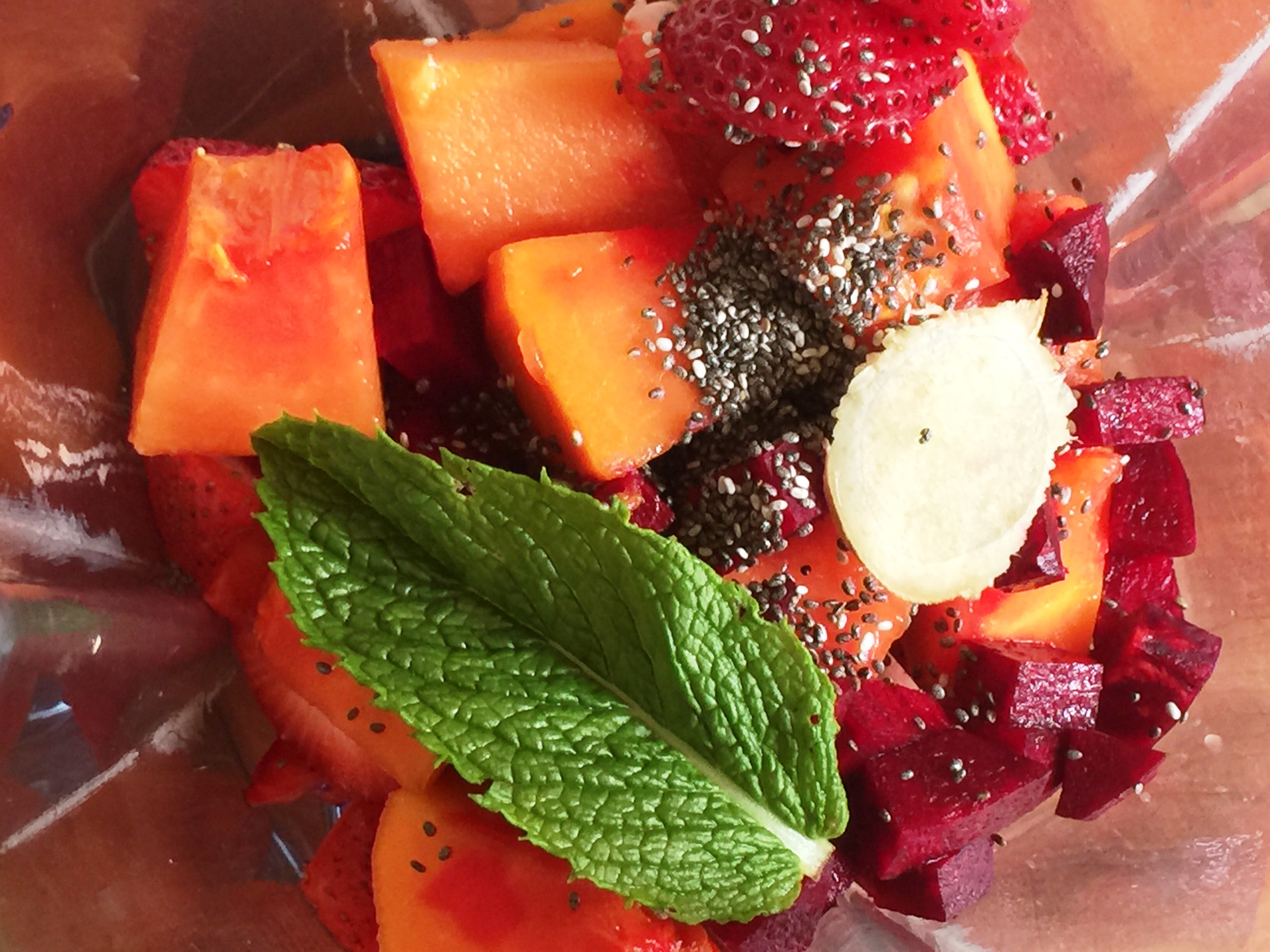
2015-06-14-1434307653-3222013-Papayalicious.jpg
Serves 1
Ingredients:
1 cup cubed papaya
1/2 cup sliced strawberries
1/4 cubed raw beets
1 cup cubed yellow squash zucchini
1 tablespoon chia seeds
2 leaves of mint
1 slice ginger
20-25 grams protein powder (rice, pea, soy or whey)
1 1/2 cups coconut water

Preparation:
Place all ingredients in a blender and process until smooth. Add tap water until the smoothie reaches the desired consistency.

Photo and recipe by Manuel Villacorta, MS, RD

Manuel Villacorta is a nationally recognized, award-winning registered dietitian/nutritionist with more than 18 years of experience. He is a trusted voice in the health and wellness industry. He is the author of Eating Free: The Carb Friendly Way to Lose Inches, Embrace Your Hunger, and Keep Weight Off for Good (HCI, 2012) Peruvian Power Foods: 18 Superfoods, 101 Recipes, and Anti-Aging Secrets from the Amazon to the Andes (HCI, 2013) and his newest book Whole Body Reboot: The Peruvian Superfoods Diet to Detoxify, Energize, and Supercharge Fat Loss (HCI, 2015).

-- This feed and its contents are the property of The Huffington Post, and use is subject to our terms. It may be used for personal consumption, but may not be distributed on a website.


from Healthy Living - The Huffington Post http://www.huffingtonpost.com/manuel-villacorta/eat-the-rainbow-five-tips_b_7580838.html
via Spiritual Social Media

Touching Video Shows The Adorable Way Deployed Military Dads Parent

For deployed military parents and their families, holidays like Father's Day are often reminders of their painful separation.

That's why the nonprofit United Through Reading helps these parents bond with their children by helping them take part in the bedtime story experience, even while they're away. In honor of Father's Day, the organization put together a heartwarming video of military service members reading Sam McBratney's Guess How Much I Love You to their children back at home.

No words sum up their powerful feelings better than the famous line, "I love you right up to the moon and back."


Like Us On Facebook |
Follow Us On Twitter |
Contact HuffPost Parents

-- This feed and its contents are the property of The Huffington Post, and use is subject to our terms. It may be used for personal consumption, but may not be distributed on a website.


from Healthy Living - The Huffington Post http://www.huffingtonpost.com/2015/06/19/united-through-reading-fathers-day_n_7615472.html
via Spiritual Social Media

NYC Is About To Make History With A Mass Meditation In Central Park

Tomorrow, the city that never sleeps is about to get quiet — and I mean really quiet. For the first time ever in the five boroughs, thousands of New Yorkers will gather to sit in a few moments of...

from MindBodyGreen http://www.mindbodygreen.com/0-20405/nyc-is-about-to-make-history-with-a-mass-meditation-in-central-park.html
via Spiritual Social Media

Ask JJ: Weight Loss Resistance

Dear JJ: I am having a problem losing weight. I don't drink alcohol. I eat grass-fed meats and veggies. I lost 40 pounds when I took the seven items out of my diet. But I have 50 to go and I have lost nothing! What do you think is going on?

I define weight loss resistance as doing everything correctly, yet being unable to consistently lose one to three pounds of fat every week.

"Weight loss resistance happens when a metabolic imbalance in the body causes us to hold on to extra weight no matter how much we exercise or limit our calories," says Marcelle Pick. "And in order for our genes and physiology to turn around to accept a new weight, we have to solve the imbalance first and get the body out of crisis mode."

Some weight-loss resistance culprits are more obvious than others. If you're not getting seven to nine hours of quality, uninterrupted sleep every night or controlling stress levels, you'll stymie your best efforts for fast, lasting fat loss.

You also want to journal, since what you track, you can improve. One study found people who wrote down everything lost twice the weight of those who didn't, and many clients discover their culprit once their journal reveals they are overeating or sneaky sugars are making their way into their diets.

By removing food intolerances -- the seven highly-reactive foods I discuss in The Virgin Diet -- that create inflammation and contribute to weight loss resistance, you've already removed a major obstacle. You also want to become aware of sneaky sugars, sometimes hiding in so-called healthy foods, which could sabotage your efforts.

If you're doing all these things correctly yet still struggle with weight loss resistance, you'll want to dive deeper to determine your potential obstacle.

Pick notes among those obstacles include systemic inflammation, digestive issues, and hormonal imbalances. Similarly, I wrote about seven often-overlooked weight loss resistance culprits in this blog.

Oftentimes several culprits are at fault. Studies show sleep deprivation -- in this case, just a partial night of terrible sleep -- can make you more insulin resistant, contributing to Type 2 diabetes and obesity. In other words, too little sleep can knock numerous fat-regulating hormones out of balance, creating a vicious cycle.

Sometimes, then, overcoming weight loss resistance requires a little sleuthing, putting together a metabolic puzzle, and perhaps working with an integrative physician.

Don't despair: Over my three decades as a nutrition and fitness expert, I've worked with the most stubborn weight loss resistance situations, and I can assure you that your case is never hopeless.

"Because there are many potential sources of the problem, there isn't a one-size-fits-all treatment that works for all weight loss resistant individuals," writes Dr. Phil. "The key is to uncover your own, specific chemical imbalance or physiological 'glitch' so that your doctor can target it with a treatment plan tailored to you."

While overcoming weight loss resistance can sometimes require patience, one simple strategy I find often works almost immediately involves starting your day with a protein shake. (Just make sure you go with the perfect protein powder.)

Studies show a meal replacement "can safely and effectively produce significant sustainable weight loss and improve weight-related risk factors of disease," and many clients find a protein shake becomes their needle mover for fast, lasting fat loss.

If you've ever struggled with weight loss resistance, what was the biggest strategy that helped you overcome that obstacle? Share yours below, and keep those great questions coming at AskJJ@jjvirgin.com.

-- This feed and its contents are the property of The Huffington Post, and use is subject to our terms. It may be used for personal consumption, but may not be distributed on a website.


from Healthy Living - The Huffington Post http://www.huffingtonpost.com/jj-virgin/ask-jj-weight-loss-resist_b_7616576.html
via Spiritual Social Media